
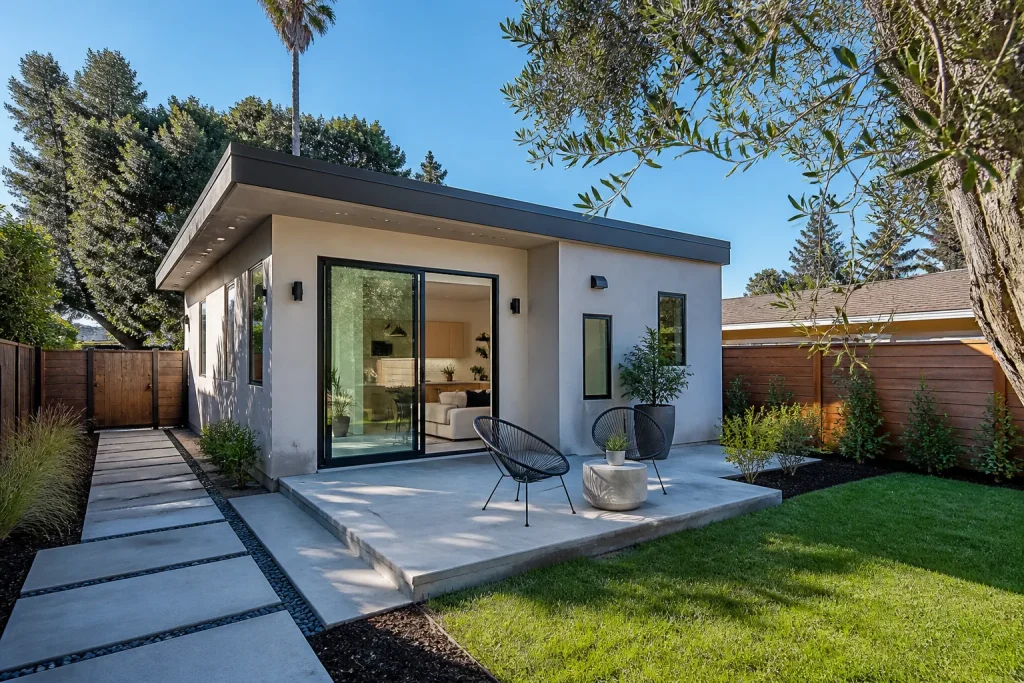
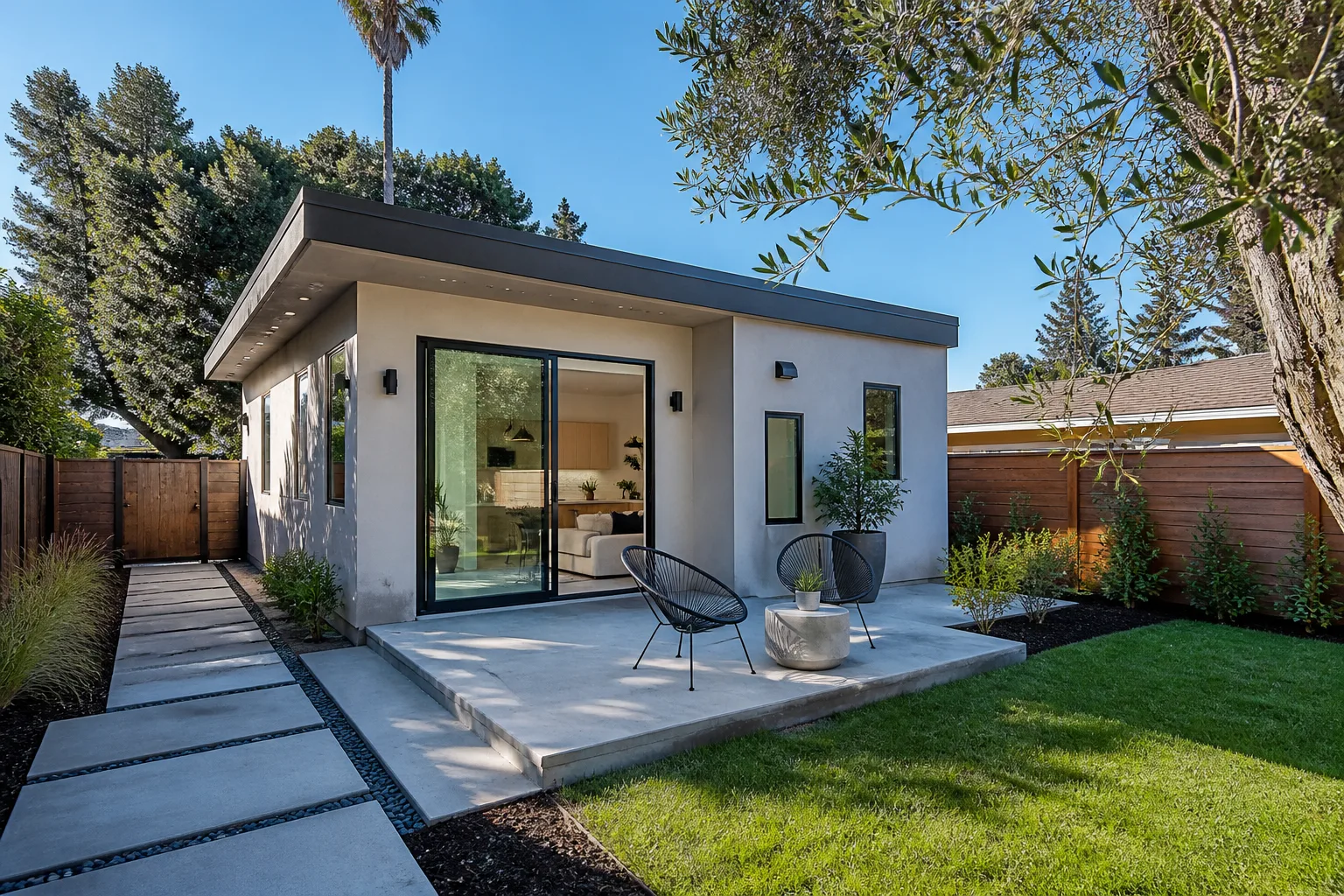
Abodu Home Addition Contractor in Los Angeles: A Homeowner’s Guide
Abodu’s headline price for a prefab ADU typically covers the factory-built unit itself, not the ground it sits on. In Los Angeles, expect to add $40,000 to $90,000 on top of Abodu’s advertised cost once you factor in foundation work, trenching, utility hookups, and permit fees. The real gap between a prefab Abodu and a site-built ADU is often narrower than the marketing suggests.
We’ve walked Los Angeles homeowners through this math many times, and the pattern is consistent: the unit price is the easy part. The site work is where the budget actually lives. If you’d rather not untangle it all yourself, call (254) 602-5618 and we’ll walk you through your lot, your numbers, and your options.
What Abodu’s Base Price Actually Covers
Abodu sells prefabricated accessory dwelling units, which are compact homes built in a factory and delivered to your Los Angeles property on a truck. The base price you see on their website covers the structure: framing, roofing, windows, interior finishes, kitchen fixtures, and bathroom fixtures. What it often does not cover is everything below the unit and everything connecting it to the city.
Here’s the itemized reality we see on LA jobs:
- Foundation and site preparation. Abodu requires a level, engineered pad. If your backyard slopes, which many Los Angeles yards do, expect grading, retaining work, or a raised foundation system at additional cost.
- Utility trenching and connections. Water, sewer, and electrical lines have to run from your main house to the ADU. In Los Angeles, trenching through a backyard typically runs $8,000 to $25,000 depending on distance, soil, and whether concrete has to be cut.
- Permit fees and plan check. Los Angeles Department of Building and Safety charges ADU impact fees, plan review fees, and school district fees. Budget $15,000 to $35,000 depending on your neighborhood and project size.
- Site restoration. After the crane and the crews leave, someone has to repair the lawn, replace the fence panel that got pulled, and rebuild the walkway. That’s typically not in Abodu’s scope.
So before you compare any prefab price against a custom build, ask what the number includes. Same question, both contractors. That’s the only way the comparison means anything.
Abodu’s Timeline Claim vs. Los Angeles Reality
Abodu’s pitch leans on speed: the unit is built in a factory in weeks, not months, and installation takes days. That part is true. The factory production schedule is not the bottleneck. In Los Angeles, the bottleneck is the city and your site.
Permitting for an ADU in Los Angeles can take anywhere from three to nine months, depending on your neighborhood, your lot’s zoning overlay, and whether your plans trigger any review easements. Abodu handles permitting, but they’re subject to the same queues as everyone else. A prefab unit does not skip the line.
Site preparation adds another layer. We worked with a homeowner in Eagle Rock whose backyard had a 4-foot grade change. Before the Abodu unit could be set, the pad had to be cut, retained, and compacted, which added six weeks to the schedule and changed the budget conversation entirely. The unit itself was ready. The lot wasn’t.
When you hear “installed in days,” remember that’s the installation, not the project. The full arc from signed agreement to move-in day on a Los Angeles prefab ADU is typically 9 to 14 months. A site-built ADU runs 12 to 18. The gap exists, but it’s months, not years.
Design Constraints of a Prefab Abodu
Abodu offers a handful of standardized floor plans: studios, one-bedrooms, and two-bedrooms with fixed dimensions and fixed layouts. If your Los Angeles lot fits one of those footprints, a prefab works. If it doesn’t, you’re paying for customization that erodes the prefab advantage.
Standardized plans assume a fairly rectangular, fairly flat buildable area. Many LA lots are long and narrow, or wide and shallow, or interrupted by a mature tree that the city won’t let you remove. Setback requirements in Los Angeles also vary by zone, and a fixed-width unit that works in Atwater Village might not fit a lot in Mar Vista.
A custom ADU adapts to the lot. A prefab asks the lot to adapt to it. That’s not a flaw in Abodu’s product. It’s just a design reality: the more your site deviates from the standard, the more a custom-built ADU starts making sense on cost and layout, not just on personal taste.
Where prefab genuinely shines is simplicity. If you want a clean, modern studio for a rental or an aging parent, and your site is straightforward, an Abodu can be a smart, fast choice. We’ve recommended prefab to homeowners in those exact situations. When the lot gets complicated, though, the math shifts.
How Lenders and Appraisers Treat Prefab ADUs in Los Angeles
This is the question most Abodu marketing doesn’t touch, and it’s the one that matters most if you’re financing the project or planning to sell within a decade. In Los Angeles, lenders and appraisers generally treat a properly permitted, permanently affixed prefab ADU the same way they treat a site-built ADU. The key phrase is “properly permitted and permanently affixed.”
If the ADU is on a permanent foundation, connected to city utilities, and permitted through the Los Angeles Department of Building and Safety, it’s a dwelling unit. Fannie Mae’s guidance on ADUs doesn’t distinguish between factory-built and site-built. The appraisal value comes from the rent it can generate and the square footage it adds, not from where the walls were framed.
Where prefab can hit a snag is if the unit is classified as personal property rather than real property, which happens when it’s set on piers, skids, or a non-permanent chassis system. That’s more common with some Boxabl or Mighty Buildings units than with Abodu, but it’s worth asking your lender directly. Likewise, Plant Prefab units seated on permanent foundations typically appraise normally.
If you’re financing through a HELOC or a construction loan, underwrite the total installed cost, not the unit price. Your lender wants to see the finished value, and that number only works if the site work is included in your scope.
How to Get an Honest Apples-to-Apples Comparison
The most common mistake we see Los Angeles homeowners make is comparing Abodu’s unit price to a site-built contractor’s total installed price. That’s not a real comparison. It’s comparing the cost of a car to the cost of a car, title, registration, and insurance. Here’s how to level the field.
Ask both Abodu and your site-built contractor to quote these line items separately:
- Total installed cost. Unit, delivery, foundation, site work, utilities, permits, and site restoration. One number. Everything in.
- Permit responsibility. Who files, who manages revisions, and who pays the fees. In Los Angeles, permit fees alone can swing a budget by $10,000.
- Utility connection scope. Distance from the main house to the ADU, trenching method, and whether the electrical panel needs an upgrade. Panel upgrades in LA regularly add $6,000 to $12,000.
- Foundation type and engineering. Slab, raised, or pier. Engineered drawings cost money regardless of which route you choose.
- Warranty terms and who stands behind the site work. A factory warranty on the unit doesn’t cover a cracked foundation or a leaking utility trench. That’s on whoever did the site work.
One of our recent projects in North Hollywood was a direct comparison against an Abodu quote. The prefab unit price looked $40,000 cheaper on paper. Once site work, trenching, panel work, and permits went in, the prefab came out about $12,000 under our custom number. The homeowner went custom because the $12,000 bought them a floor plan that actually fit their narrow lot. That’s the conversation worth having, and it starts with the right questions.
What to Check Before You Commit to Any ADU in Los Angeles
Whether you go prefab or site-built, there are three things we tell every homeowner to verify before signing anything. These are the issues that turn a clean ADU project into a six-month headache.
First, confirm your property’s zoning actually allows an ADU at the size you want. Los Angeles has been steadily loosening ADU rules, and Senate Bill 9 created additional pathways, but hillside zones, fire zones, and historic overlay districts carry their own rules. Second, know your sewer and electrical situation. Older LA homes on 100-amp panels usually need an upgrade to 200 amps before the ADU can be connected, and a sewer line that’s a hundred years old might need replacement, not just a tie-in. Third, get every commitment in writing. The price, the arrival window, the scope, the guarantee. If a contractor won’t put it on paper, walk.
That third one is non-negotiable for us. It’s why every project we do operates under The Kingswell Guarantee: a written price before work begins, a defined arrival window, a clean job site, and a written guarantee on every build. If the work isn’t done right, we come back and make it right within 365 days, at no charge. We’ve been doing it that way since 2010, when Lodgewick ADU Builders started as part of the Kingswell family of home-service companies.
The Bottom Line
Abodu builds a quality prefab ADU, and for the right Los Angeles lot, it can be a genuinely good option. The catch is that the quoted price is never the final cost, and the timeline is never just the factory schedule. Site work, utilities, permits, and the peculiarities of your specific lot are where the real budget lives, and that’s true whether your ADU comes off a truck or gets framed in your backyard.
If you’re weighing Abodu against a custom-build in Los Angeles and want straight numbers from someone who’s done both, we’re happy to help. Lodgewick ADU Builders offers free estimates for ADUs, garage conversions, and home additions. We’ll give you a written price and a written guarantee, and we’ll answer the phone when you call. (254) 602-5618.
If you want to explore more, start with our Lodgewick ADU Builders home page, read about Home Addition Contractor in Los Angeles services, or compare our approach to Garage Conversion Contractor in Los Angeles and ADU Builders in Los Angeles.
Frequently Asked Questions
Abodu’s advertised unit price is typically lower, but the total installed cost is usually only $10,000 to $20,000 less than a site-built ADU once you add foundation, utility connections, and permits. The comparison only works if you compare total installed numbers, not unit prices. Call (254) 602-5618 for a free, written estimate on your lot.
Factory production takes 8 to 12 weeks, and installation takes a few days. But permitting and site preparation typically push the full timeline to 9 to 14 months in Los Angeles. A site-built ADU usually takes 12 to 18 months total, so the gap is measured in months, not years.
Abodu manages permitting, but site work like grading, foundation, trenching, and utility connections is typically separate and billed on top of the unit price. Before you sign, confirm exactly what’s included so you’re not surprised by a five-figure site-work invoice.
A properly permitted prefab ADU on a permanent foundation is generally valued the same as a site-built ADU by Los Angeles appraisers and lenders. The value comes from the rentable square footage and the permit record, not the construction method. Ask your lender to confirm before you finance.
Written by Russ Delmar, Owner at Lodgewick ADU Builders, serving Los Angeles since 2010.
Need ADU Help?
Call Lodgewick ADU Builders - licensed & insured, here with fast after-hours help in Los Angeles.
(254) 602-5618