
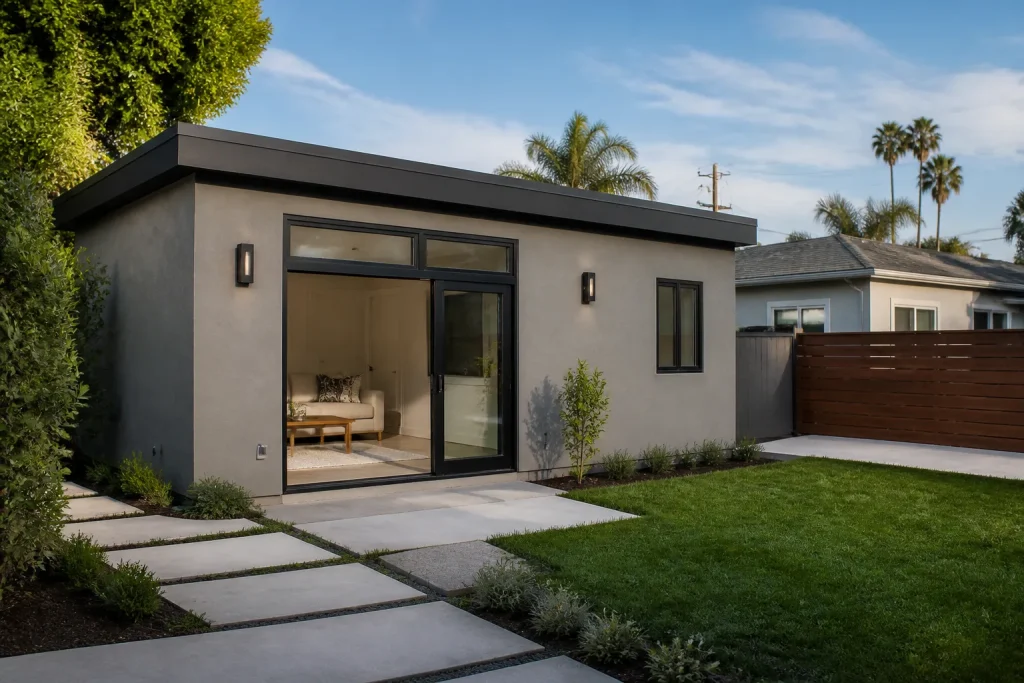
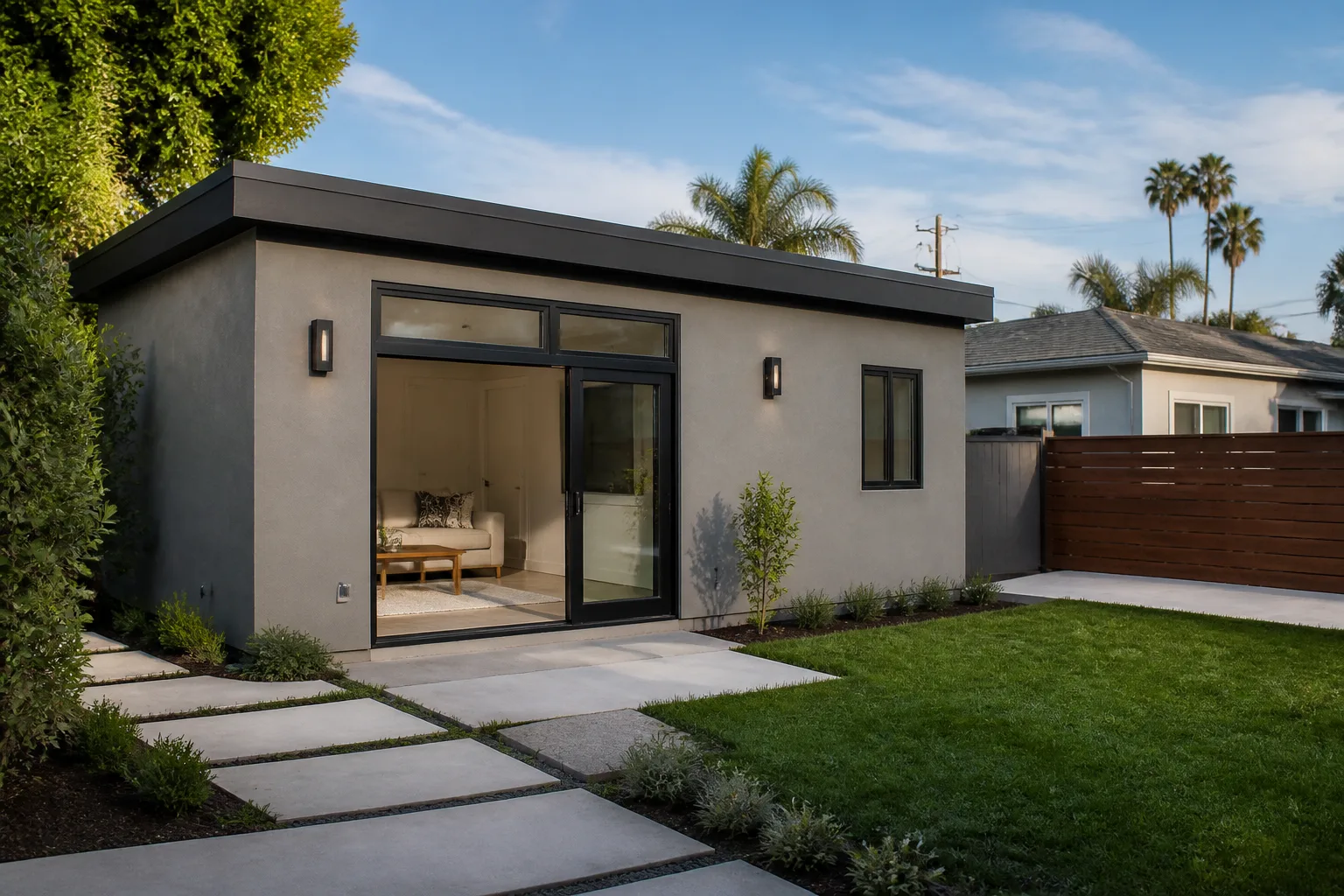
Boxabl Home Addition Contractor in Los Angeles: A Homeowner’s Guide
Boxabl’s Casita is the foldable ADU that unfolds from a 20-foot shipping container footprint in about an hour. But in Los Angeles, the “fast” part stops at your property line. As of 2024, LADBS treats the Casita as an unrated structure, which means it needs a full engineering review before you can pull permits, and that review typically adds three to six months to your timeline. If you’d rather skip the research and talk to someone who handles this every week, call Lodgewick ADU Builders at (254) 602-5618 for a free estimate.
Here’s the part most homeowners miss: Boxabl builds the unit. They don’t pour your foundation, pull your LA permits, connect your utilities, or deal with LADBS plan check corrections. That’s all on your local contractor. And in Los Angeles specifically, the contractor you choose determines whether your Boxabl project takes eight months or two years.
What “Unrated” Actually Means for Your Boxabl in Los Angeles
When LADBS calls the Boxabl Casita “unrated,” they’re saying the unit hasn’t gone through the state’s factory-built housing certification process the way a HUD home or a California-approved modular unit would. It doesn’t mean the Casita is unsafe. It means Los Angeles has no pre-approved paperwork on file to fast-track your permit.
So your project goes through a full plan check, just like a stick-built addition would. LADBS wants to see:
- Engineering calculations for the folding wall and roof assemblies, prepared by a California-licensed structural engineer
- Foundation plans stamped for LA soil conditions, which vary block by block, from the clay-heavy soil in the Valley to the sandy fill near Playa del Rey
- Utility connection drawings showing how water, sewer, and electrical tie into your existing service, signed off by an LA-licensed MEP engineer
- Site compliance documents including setbacks, lot coverage, and fire access, which Boxabl’s standard drawings do not include
This is where a local contractor earns their fee. Someone who knows the LADBS plan check process in Los Angeles can anticipate the correction letters, pre-stage the engineering, and keep your project moving. Someone who doesn’t will learn on your dime.
Realistic Timeline and Cost for a Boxabl ADU in Los Angeles
Let’s talk straight numbers. A Boxabl Casita runs somewhere in the $50,000 to $70,000 range for the unit itself, depending on trim level and delivery distance. But that’s the headline number, not the finished project cost.
In Los Angeles, plan for the full project to land between $120,000 and $180,000 by the time the unit is permitted, sitting on an engineered foundation, and connected to city utilities. Here’s how that breaks down in our experience across LA neighborhoods:
- Unit cost: $50,000 – $70,000
- Engineering and plan check fees: $8,000 – $15,000, including the LADBS plan check deposit and any corrections
- Foundation and site prep: $20,000 – $35,000, depending on whether you need grading, retaining, or trenching for utilities
- Utility connections: $15,000 – $30,000, and yes, that’s a wide range. Running sewer fifty feet across a flat yard in Canoga Park is a different job than tying into a hillside main in Silver Lake.
- Contractor management and finish work: $15,000 – $30,000, covering the local GC who coordinates delivery, sets the unit, and handles the punch list
- LADBS permit fees and school district fees: $5,000 – $10,000, which catch a lot of people off guard
Your timeline in Los Angeles: three to six months for permits and engineering, then a few weeks for site work and foundation, then the unit shows up and unfolds in a day. Total from contract signing to move-in readiness, realistically, eight to fourteen months.
What Boxabl Specifies vs. What Los Angeles Adds On Top
Boxabl’s site requirements are pretty lean: a flat, level pad, a crane or forklift access path, and clear space to unfold the unit. That’s what the manufacturer needs for delivery. Los Angeles zoning adds a whole second layer, and nobody at Boxabl is going to walk you through it.
Here’s what LA requires that the Boxabl spec sheet doesn’t mention:
- Setbacks: LA’s ADU ordinance allows a 4-foot rear and side setback for new detached ADUs, but existing structures and lot shapes can complicate that. If your lot is irregular, those 4 feet might not be where you think they are.
- Lot coverage: In most R1 zones, your ADU can’t push total lot coverage past 40% to 50%, depending on the specific zone. A Casita eats about 361 square feet of ground space, not counting any walkway or landing.
- Owner-occupancy: The state removed the owner-occupancy requirement for ADUs for most situations through 2025 and beyond, but Los Angeles has local nuances depending on whether you’re renting the main house or the ADU. Get this in writing from LADBS or your contractor before you assume anything.
- Fire access: If your unit sits behind the house or down a long driveway, LA fire code may require specific access dimensions or turnaround space that a 20-foot box on a pad doesn’t automatically satisfy.
We pulled a Casita onto a flag lot in Sunland last spring where the fire access requirement added three weeks to the permit process. The unit itself was ready to go. The site wasn’t. That’s the kind of thing a general Boxabl overview won’t tell you, and it’s exactly the detail that matters in Los Angeles.
How to Structure Your Contractor Contract for a Boxabl Project
When the manufacturer delivers the unit and your local contractor handles everything else, the contract needs to be crystal clear about who owns what. We’ve seen too many LA homeowners sign a contract that was written for a conventional ADU build, then find out nobody was contractually responsible for coordinating the Boxabl delivery window, the crane, or the final utility tie-in.
At a minimum, your contract should spell out:
- Who orders the unit and when. If the contractor orders it, the contract should state the exact model, trim, and delivery date range, with a clause for what happens if Boxabl’s schedule slips.
- Who is on site for delivery. The contractor should be physically present when the truck arrives, not just “available by phone.” The unfold process has a specific sequence, and someone who’s never seen it can’t direct it.
- Who handles the LADBS corrections. Plan check corrections are normal. Your contract should say the contractor manages all resubmissions until permit issuance, with no increase in their fee for standard correction cycles.
- Who owns the punch list after the unit is set. Foldable prefab units still need finish work: trim, caulking, sometimes flooring transitions, appliance hookups. That should be in writing, item by item.
- What the guarantee covers. If the unit settles or a connection fails within the first year, who comes back? At Lodgewick, every Boxabl project we touch carries our 365-Day Done Right Promise in writing: if it’s not done right, we come back and make it right, free of charge within the guarantee period.
Red Flags: When a Contractor Says They’ve “Done Boxabl Before”
Boxabl is new enough that most contractors in Los Angeles have not actually completed one. Yet we hear from homeowners every month that they met with someone who claimed Boxabl experience. Here’s how to verify it in thirty seconds.
- Ask for the LADBS permit number of the completed Boxabl project. Permits are public record. If they can’t produce one, they haven’t done one in Los Angeles.
- Ask what “unrated” means to LADBS. A contractor with real Boxabl experience in LA can explain the engineering review process in detail. A contractor who stumbles or waves it off hasn’t been through it.
- Ask to see photos of the foundation they poured for the unit. A Boxabl Casita needs a specific perimeter foundation design. If their photos show a generic slab, they may have done a Tuff Shed or a different prefab and they’re conflating the experience.
- Ask who their structural engineer is. Every Boxabl project in Los Angeles needs a California-licensed structural engineer who’s reviewed the folding assembly. The contractor should be able to name theirs without hesitating.
We’re not saying every contractor who claims Boxabl experience is lying. We are saying that in Los Angeles, where the permit office has specific requirements for unrated prefab units, you should verify the claim the same way you’d verify a roofer’s license. The Kingswell Way, the standard we work under at Lodgewick, is to put every commitment in writing before work starts, and that includes naming our engineer, our permit strategy, and our timeline in the contract. If a contractor won’t put it in writing, that’s your answer.
Boxabl vs. Other Prefab Options in Los Angeles
Boxabl gets the headlines, but it’s not the only game in town, and in some LA situations it’s not the best fit. Brands like Abodu and Cover offer units that are California-certified, which means they’ve already cleared part of the state-level review that Boxabl still has to go through. That can shave months off a Los Angeles permit timeline. Mighty Buildings and Dvele are stronger options if you’re considering a two-story ADU or something with more architectural flexibility than a fold-out rectangle.
Our honest take: Boxabl works well for a straightforward backyard ADU on a flat or mildly sloped lot where you want predictable cost and a small footprint. It’s less ideal for hillside lots, tight access situations where a crane can’t operate, or designs where you want something larger than the Casita’s roughly 19-by-19-foot interior. In Los Angeles, where lots vary so much block to block, the right brand depends less on the marketing and more on your actual site conditions.
When to call a pro: if you’re comparing Boxabl to other prefab options and you’re not sure which one your lot can actually support under LA zoning, that’s the moment to bring in a local contractor who works with multiple brands. Related services we handle around Los Angeles include our home addition contractor work for stick-built projects, garage conversions when you’d rather use existing square footage, and full ADU builds for any brand or construction method.
The Bottom Line
Boxabl’s Casita is a legitimate, interesting option for an ADU in Los Angeles, but the manufacturer’s promise of “unfold in an hour” has very little to do with the actual project timeline. In LA, you’re looking at an unrated structure permit path, an engineering review, three to six months of plan check, and a finished cost of $120,000 to $180,000 before you’re ready to hand over the keys. The contractor you choose is the difference between a smooth process with the paperwork handled correctly and eighteen months of correction letters.
If you’re in Los Angeles and want to know whether Boxabl is right for your specific lot, Lodgewick ADU Builders offers free estimates. We’ll walk the property, look at your zoning, and give you a written price before any work starts, that’s how we’ve operated since 2010. Call (254) 602-5618 to schedule yours.
Frequently Asked Questions
Yes, Boxabl Casita units can be permitted in Los Angeles, but they go through a full LADBS plan check as unrated structures, which requires a California-licensed structural engineer’s review and typically adds three to six months to the permit timeline. Call (254) 602-5618 for a free estimate and we’ll walk you through the exact process for your property.
A Boxabl Casita in Los Angeles typically costs $120,000 to $180,000 fully installed, including the $50,000 to $70,000 unit, plus engineering, foundation, utility connections, permit fees, and local contractor management. For an exact written quote on your lot, call (254) 602-5618, estimates are free.
Plan for eight to fourteen months from contract signing to move-in ready, with three to six months of that being LADBS plan check and engineering review, a few weeks for foundation and site work, and then one day for the unit itself to unfold on site. The wait is in the paperwork, not the build.
No. Los Angeles requires permitted foundation work, licensed utility connections, and engineered documentation for unrated prefab structures, all of which require a licensed contractor. Attempting a DIY installation would violate the permit conditions and put your unit’s warranty and insurance at risk. For a contractor who handles the full process, call (254) 602-5618.
Written by Russ Delmar, Owner at Lodgewick ADU Builders, serving Los Angeles since 2010.
Need ADU Help?
Call Lodgewick ADU Builders - licensed & insured, here with fast after-hours help in Los Angeles.
(254) 602-5618