
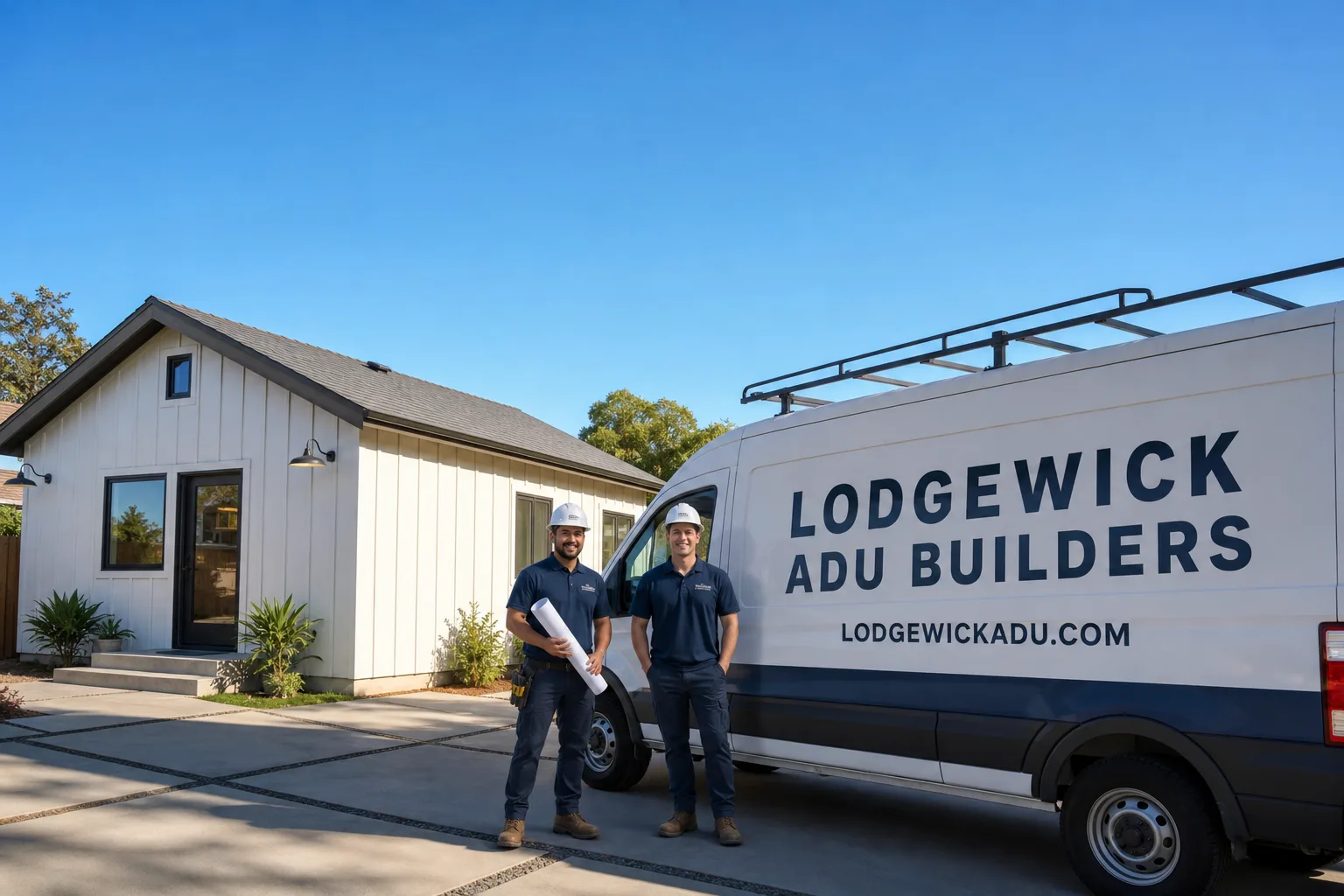
Fast, Reliable ADU Builders Across Rolling Hills Estates
Adding an accessory dwelling unit in Rolling Hills Estates usually makes sense on paper: the lots are big enough, the zoning allows it, and the equity math works. What makes the project succeed or stall is how well the builder understands this city’s equestrian easements, its clay-heavy soils, and the condition of aging outbuildings that often sit exactly where an ADU ought to go. That’s the ground our crews walk every week. We’re ADU Builders who have converted tack rooms off Palos Verdes Drive North into legal rentals and helped homeowners figure out whether to retrofit a stable or build fresh. If you’re weighing a detached ADU, a garage conversion, or a JADU inside the main house, start with a straight conversation about what your specific lot will allow. Call (254) 602-5618 and we’ll walk you through it.
Why Lodgewick ADU Builders Is Rolling Hills Estates’s Preferred ADU Builders Company
Homeowners here have called us after other contractors gave them a number before ever stepping onto the trail easement, then sent a change order the day the city flagged it. That’s the pattern we’re built to break. Lodgewick operates under The Kingswell Guarantee: a written price before any work starts, a defined arrival window, a clean job site, and a written guarantee on every project that includes a free return visit if the work fails within 365 days. Russ Delmar, who leads our ADU work in Rolling Hills Estates, reviews every site plan against the city’s equestrian overlay before we quote a dollar. That’s our standard, not a favor.
Our reputation in Rolling Hills Estates rests on what neighbors hear from neighbors: we show up when we say, we don’t price-shop mid-project, and we leave a job site cleaner than we found it. Homeowners appreciate knowing that a live person answers our phone around the clock. No voicemail loops when you have a question about a permit status or a trail setback. And because Rolling Hills Estates presents a very specific combination of expansive Altamira clay and marine-layer moisture, we prepare estimates with those conditions already priced in, not as discoveries to bill for later.
ADU Plans in Rolling Hills Estates
ADU Plans in Rolling Hills Estates are not a formality. They’re the point where an affordable project becomes an expensive one if the lines are wrong on paper. Before we draw anything, we physically walk the property to locate the equestrian trail easement stakes. City trail corridors regularly cut across what looks on the county parcel map like the obvious backyard pad site. Building over or too close to a trail easement triggers a full redesign and can push the project to Planning Commission review. That’s a two-to-four-month delay that shows up as cost, not just inconvenience. In Rolling Hills Estates, the staking walk happens before the first sketch.
Site Assessment and Easement Mapping
We map the buildable envelope against the recorded trail easement, the existing outbuilding footprint, and the city’s setback requirements. On a half-acre lot, this often means the ADU shifts twenty feet from where the homeowner assumed it would go. We’d rather find that on day one than at permit submittal.
Permit-Ready Construction Drawings
Once the site is confirmed buildable, we produce the drawings the city’s design review expects: elevation details that respect the neighborhood’s single-story character, structural notes that account for Altamira clay’s movement, and Title 24 energy compliance for any converted outbuilding. Plan costs for a typical Rolling Hills Estates ADU run roughly $8,000 to $18,000 depending on whether it’s a conversion of an existing structure or new construction.
ADU Contractor in Rolling Hills Estates
An ADU Contractor in Rolling Hills Estates has to be honest about what older buildings hide. The ranch homes and agricultural outbuildings here were built between the 1950s and 1970s, when nobody anticipated a granny flat with its own kitchen, heat pump, and EV charger load. We open the walls before we promise a price. That’s what separates a bid that holds from a bid that dissolves into change orders. Our team, led by Russ Delmar in Rolling Hills Estates, treats the pre-construction inspection as the foundation of the whole project, not a checkbox.
Outbuilding Conversion and Retrofit
A stable, tack room, or workshop conversion is frequently the most cost-efficient ADU path in Rolling Hills Estates, because the shell and roof already exist. What those structures almost universally lack is electrical capacity, plumbing rough-in, and insulation meeting current Title 24 standards. We scope those upgrades during the inspection and write them into the contract as line-item allowances, not vague contingencies.
Ground-Up Detached ADU Construction
When the site supports new construction, we handle everything from geotechnical report to final inspection. Rolling Hills Estates soils make engineered foundations non-negotiable. A new detached ADU here typically runs $280,000 to $450,000 depending on square footage, finishes, and site preparation, which in this city includes real soil work, not just a slab on grade.
Trusted Brands We Service in Rolling Hills Estates
For prefab and panelized ADU projects, we work with brands whose engineering we trust: Cover, Dvele, and Boxabl. Each has a different sweet spot: Cover’s panelized system works well on constrained lots where traditional framing would eat up the buildable envelope, Dvele’s high-performance envelope suits homeowners who want the most predictable energy profile for a hillside site, and Boxabl’s fold-down module can work well for a compact studio ADU on a lot with limited access. Because we maintain local material relationships across the South Bay and Palos Verdes peninsula, lead times for these systems stay predictable for Rolling Hills Estates customers.
Common ADU Builders Problems We See in Rolling Hills Estates Homes
- Building the pad before staking the easement: A trail corridor that cuts across the rear yard forces a full site redesign and can send the project to Planning Commission review. This happens more often than you’d think because parcel maps don’t show the stakes.
- Assuming a stable or tack room is conversion-ready: Altamira clay movement and decades of marine-layer moisture mean rotted base plates, failed waterproofing, and undersized framing found mid-permit, not on the original bid. The pre-purchase inspection rarely catches this.
- Quoting flat numbers without code-triggered allowances: A Rolling Hills Estates permit requires electrical, plumbing, and Title 24 insulation upgrades once walls are open. A flat remodel quote without written allowances leaves the homeowner with an unbudgeted surprise.
- Underestimating the geotechnical requirement: Caliche hardpan and expansive clay beneath Rolling Hills Estates slabs demand soil reports and engineered foundations for nearly any new ADU pad. Neighboring flat-land cities don’t carry the same burden, and their prices reflect that.
Pricing for ADU Builders in Rolling Hills Estates, CA
| Project Type | Typical Range in Rolling Hills Estates |
|---|---|
| Outbuilding conversion (stable/tack room/workshop) | $180,000 – $320,000 |
| Garage conversion ADU | $160,000 – $260,000 |
| New detached studio ADU (under 600 sq ft) | $280,000 – $380,000 |
| New detached two-bedroom ADU | $380,000 – $450,000+ |
| Junior ADU inside the primary home | $90,000 – $160,000 |
These ranges reflect what we’ve actually bid and built in Rolling Hills Estates, where Altamira clay and equestrian easement constraints add real cost compared to flat-land South Bay cities. A converted tack room off Palos Verdes Drive North can land near the lower end when the shell is sound and the electrical panel upgrade is modest. A new build on a lot with poor soil conditions and a trail corridor crossing the obvious pad site lands at the upper end. We price the site, not a brochure. Call (254) 602-5618 for a written, line-item estimate before you commit to anything.
We Also Serve Cities Near Rolling Hills Estates
While we know Rolling Hills Estates best, our crews regularly work across the Greater Los Angeles basin for projects in Los Angeles, Long Beach, Anaheim, and Riverside. The same permitting care and Kingswell Guarantee apply wherever we build.
Serving Rolling Hills Estates, CA - Our Local Coverage Area
We’re based in the Rolling Hills Estates area and know this community well. Use the map below to see our service coverage - if you’re nearby, we can almost certainly help.
FAQs About ADU Builders in Rolling Hills Estates
Yes, and this is the single most important site factor in the city. Rolling Hills Estates maintains equestrian trail easements along rear and side property lines in designated zones, and those corridors are not optional. A detached ADU must be sited outside the easement and respecting the required setback from it. We stake the easement physically before we draw anything. Building over or too close to a trail corridor will not pass design review. Call (254) 602-5618 and we’ll walk your lot with you.
Usually yes, and it’s frequently the smartest financial move in Rolling Hills Estates because the structure and roof already exist. What the conversion will require is opening the walls to assess framing, electrical capacity, and rot from years of coastal moisture, then bringing the building up to Title 24 energy standards. On the half-acre lot off Palos Verdes Drive North we converted recently, a 1950s tack room needed a 200-amp panel upgrade, full plumbing rough-in, and borate treatment to the framing before finish work could begin. Plan for $180,000 to $320,000 depending on condition, and expect us to show you photos of what’s inside the walls before we ask you to sign anything.
The Palos Verdes Peninsula sits on expansive Altamira clay and caliche hardpan that expand and contract with moisture changes far more than the soils in neighboring flat-land cities. A standard slab poured without geotechnical review will crack, lift, or settle. A geotechnical report identifies the soil profile and informs the foundation design, which typically means deeper footings or a post-tension slab. That report costs several thousand dollars, but skipping it is how homeowners in Rolling Hills Estates end up with a cracked ADU slab three years after move-in.
The three things we find most often: undersized 60-amp electrical service, no plumbing rough-in where the bathroom needs to go, and rotted base plates from decades of marine-layer fog and moisture. None of this appears on a county assessor record or a pre-purchase inspection. That’s why we write allowances into every Rolling Hills Estates contract for these specific code-triggered upgrades, so the number you approved is the number you pay. If something shows up beyond the allowance, we price it, show you the issue, and get your written approval before touching it. That’s the Kingswell Way.
We inspect first and quote second. Before any permit application is filed, we open enough walls in the existing structure, test the panel, check the foundation, and walk the easement line. That lets us write a fixed price with specific written allowances for the code-triggered upgrades we know are coming. Every project includes The Kingswell Guarantee: a written price before work begins, a defined arrival window, a clean job site, and a written guarantee with a free return visit if anything fails within 365 days. Call (254) 602-5618 for a free estimate, and we’ll put the number in writing before you decide.
Written by Russ Delmar, ADU lead at Lodgewick ADU Builders, serving Rolling Hills Estates homeowners under The Kingswell Guarantee.