
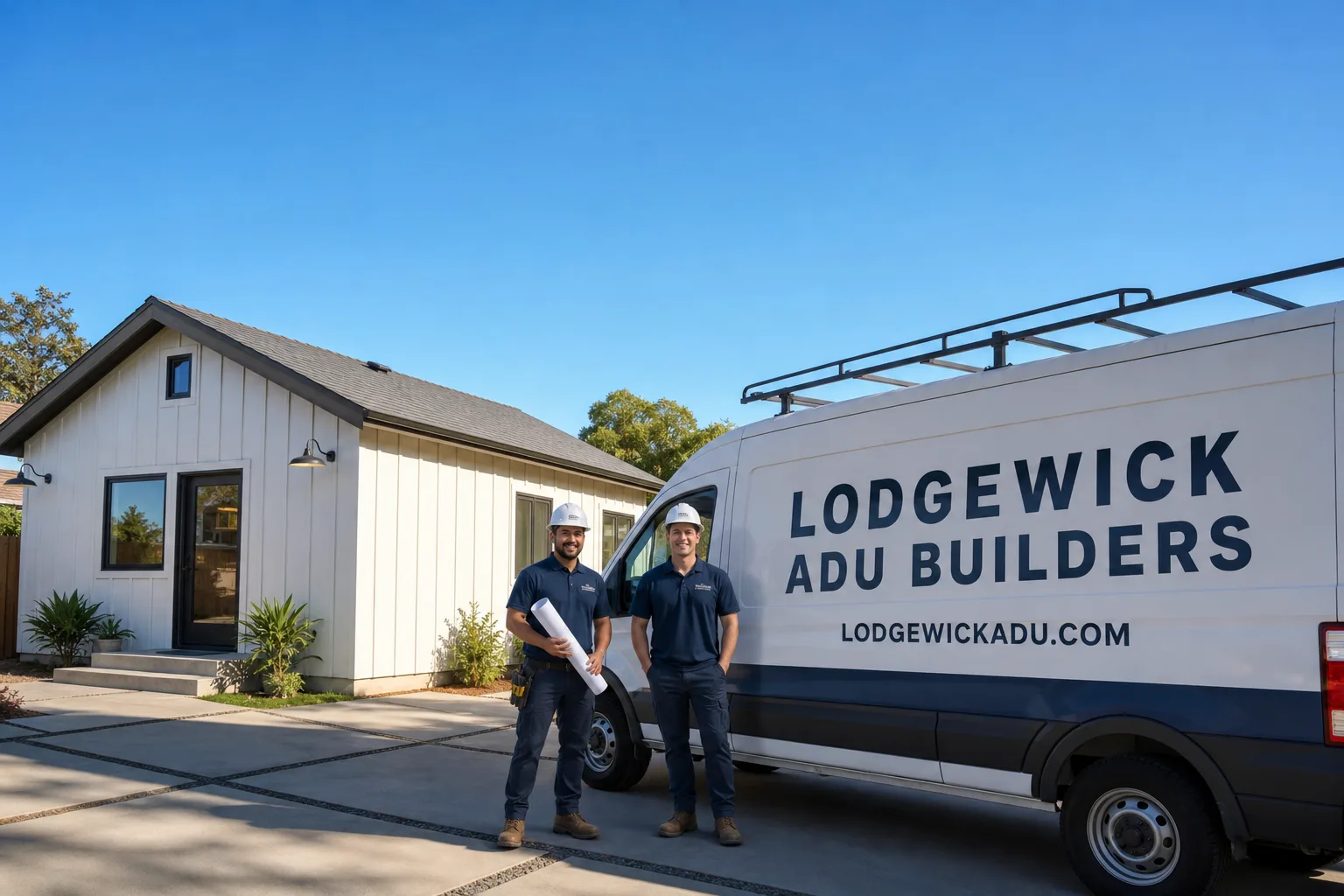
Fast, Reliable ADU Builders Across San Dimas
Most San Dimas homeowners don’t discover their ADU project has a wildfire-compliance problem until the permit is already in review. Northern hillside parcels off San Dimas Canyon Road carry Very High Fire Hazard Severity Zone designations, and often a horse-keeping overlay stacked on top. That means Chapter 7A construction standards, ember-resistant everything, plus non-standard setbacks from animal enclosures. Flat lots a mile south never deal with any of it. We do. Lodgewick ADU Builders has worked those exact parcels, and we know which questions to ask before the city does. Call (254) 602-5618 and we’ll walk your lot’s specific overlay records before we ever talk price.
Why Lodgewick ADU Builders Is San Dimas’s Preferred ADU Builders Company
The Kingswell family built Lodgewick ADU Builders in 2010 around a simple promise: write the price down before any work starts, show up when we say we will, and put the guarantee in writing alongside the contract. Russ Delmar leads our San Dimas projects personally, and he’s the one who walks the parcel with you before any number gets quoted. It matters here because two adjacent San Dimas lots can have completely different fire-overlay and zoning burdens, and a written price is worthless unless it’s based on your actual property records.
San Dimas homeowners tell us the same story again and again: a contractor gave a verbal ballpark, then the price changed once the panel upgrade or the Chapter 7A cladding spec hit the permit desk. Our crews quote from the city’s own zoning and fire-overlay data, so the number you get is the number you pay. We answer the phone 24/7 with a live person, and we show up in a defined window, not a four-hour blur. Background-checked, uniformed technicians on every job site. Cleaner when we leave than when we arrived. That’s The Kingswell Way.
ADU Contractor in San Dimas
An ADU contractor in San Dimas handles the full build from permit drawings through final inspection, but the job starts long before concrete is poured: pulling the parcel’s FHSZ designation, checking for horse-keeping overlays, and confirming what your 1955 – 1975 tract home’s electrical panel can actually support. A full detached ADU here runs roughly $230,000 – $385,000 depending on hillside conditions and fire-hardening requirements, while a garage-conversion JADU typically lands between $95,000 and $160,000. Those numbers include the panel and plumbing upgrades most San Dimas permits trigger.
Fire-Zone Parcel Review
We pull your property’s complete zoning and fire-overlay records before we write a single line item. Northern San Dimas lots inside the Very High FHSZ trigger Chapter 7A requirements: Class A roofing assemblies, ember-resistant vents, ignition-resistant cladding. Miss those and the permit stalls for weeks.
Panel and Plumbing Upgrades
1960s ranch homes in San Dimas almost always carry original 100-amp panels and galvanized supply lines. The city’s hard groundwater corrodes that galvanized pipe, and the building department flags both for replacement before signing off on any ADU. We fold those costs into your written quote upfront, not as a surprise change order.
ADU Design in San Dimas
ADU design in San Dimas has to answer one question before anything else: where exactly on the lot does the structure sit, and what overlays govern that spot? A detached ADU tucked against the San Gabriel foothills needs fire-rated assemblies and ember-resistant detailing that a flat valley-floor ADU never considers. Russ Delmar works directly with design and permitting on every San Dimas project, because the design phase is where the fire-zone and horse-keeping complications either get caught or become expensive rework. Design-retainer fees here typically run $6,000 – $14,000 depending on site complexity.
FHSZ Materials Specification
For hillside parcels we spec ignition-resistant James Hardie cladding, ember-rated vents, and Class A roofing as standard, not upgrade. The materials cost 8 – 15% more than standard spec, but they’re not optional on these lots. The city will reject anything less, and cutting corners here means a failed inspection and a stalled project.
Setback and Enclosure Planning
Horse-keeping overlays in northern San Dimas require non-standard setbacks between the ADU footprint and any animal enclosures. That constraint sometimes shifts the entire building envelope. We account for it in design, before the foundation is laid, not after the city flags it.
Trusted Brands We Service in San Dimas
We work hands-on with the manufacturers that hold up in San Dimas conditions. James Hardie cladding is our default for FHSZ-adjacent ADUs because it clears Chapter 7A ignition-resistant requirements without compromise. Abodu and Cover prefab systems work well on flat valley-floor lots where the lead time matters more than custom detailing. We carry installation-specific materials and hardware in our Los Angeles-coordinated staging, so San Dimas projects don’t wait on parts coming from out of state. Dispatch and scheduling are coordinated from the brand’s Los Angeles office; crews serve San Dimas locally. When you call, a live person answers and can tell you exactly where your materials are.
Common ADU Builders Problems We See in San Dimas Homes
- Galvanized fasteners and thin-wall aluminum windows on canyon-mouth ADUs. Ember exposure and the Inland Valley’s heat cycling eat cheap hardware fast. We spec hot-dip galvanized or stainless hardware and reinforced window frames on every foothills-adjacent build.
- Mini-splits sized for coastal LA, not the San Dimas heat basin. Summer highs run 10 – 15°F hotter here than the West Side, and an undersized system runs continuously and still won’t hold setpoint. We size for 105°F+ peak loads as the floor, not the ceiling.
- Generic state-law ADU checklists applied to northern hillside parcels. The contractor never pulls the FHSZ map or the horse-keeping overlay, then the permit hits Chapter 7A vent, roofing, and cladding requirements plus non-standard enclosure setbacks. The project stalls for weeks and the price changes.
- Original 100-amp panels and galvanized supply plumbing on 1960s ranch homes. These fail inspection on nearly every San Dimas ADU permit. Some contractors treat them as a surprise add-on after the contract is signed. We include them in the written price from day one.
Pricing for ADU Builders in San Dimas, CA
A garage-conversion JADU in San Dimas typically runs $95,000 – $160,000. A full detached ADU on a flat valley-floor lot generally lands between $230,000 and $320,000. A hillside ADU on a Very High FHSZ parcel with fire-hardening and horse-keeping setback requirements runs $290,000 – $385,000. The fire-hardening materials premium alone is usually $18,000 – $35,000 depending on square footage and cladding choices. The panel and plumbing upgrades San Dimas permits commonly require add another $6,000 – $14,000. Every quote we give is written, line-itemed, and fixed before any work starts. Call (254) 602-5618 for a free estimate and a straight answer on your specific parcel.
We Also Serve Cities Near San Dimas
In addition to our ADU Builders in San Dimas work, our crews take projects in La Verne, Glendora, Covina, and Azusa. The flat valley-floor lots in La Verne rarely face the FHSZ complications we handle routinely up the hill, but the same panel and plumbing upgrades apply across the whole area.
Serving San Dimas, CA - Our Local Coverage Area
We’re based in the San Dimas area and know this community well. Use the map below to see our service coverage - if you’re nearby, we can almost certainly help.
FAQs About ADU Builders in San Dimas
Yes, and there is no exemption for small ADUs. If your parcel falls inside the Very High FHSZ designated by CAL FIRE, the city will require Class A roofing assemblies, ember-resistant vents, and ignition-resistant exterior cladding before issuing a building permit. The requirements apply to detached ADUs and garage conversions alike. Call (254) 602-5618 and we’ll check your parcel’s designation before you spend a dollar on design.
Because the building department will not sign off on added electrical load without confirming your existing service can handle it. San Dimas homes from the 1955 – 1975 boom almost universally carry original 100-amp panels, and an ADU’s mini-split, appliances, and lighting typically push the total load past that threshold. The city flags the panel, and the permit stalls until it’s replaced. We quote that upgrade in the written price from day one, not as a change order.
The hillside lot carries overlay layers the valley lot never touches. Parcels in the northern quadrant often sit inside the Very High FHSZ, triggering Chapter 7A construction standards for roofing, vents, and cladding. Many of those same parcels also carry horse-keeping zoning overlays requiring non-standard setbacks from animal enclosures. A valley-floor lot off Arrow Highway or Bonita Avenue typically faces neither requirement. The difference can shift a project cost by $40,000 or more.
A mini-split sized for the actual heat load. San Dimas sits in the Inland Valley heat basin, where summer highs regularly exceed 105°F, and that’s 10 – 15°F hotter than coastal LA. A system spec’d for a West Side peak load will run continuously and still struggle to hold setpoint on an August afternoon. We size every San Dimas ADU system for local peak conditions, not generic California averages. The difference is usually one half-ton to one full ton of capacity.
Yes, and San Dimas’s postwar tract lots are unusually well-suited for it. Homes from the 1950s and 1960s commonly sit on 7,500 to 10,000-plus square foot lots with detached two-car garages and deep rear yards. That configuration physically accommodates both a JADU inside the existing garage footprint and a separate detached ADU in the yard. However, if the parcel sits in the fire zone or under a horse-keeping overlay, both structures must clear those compliance layers, which changes the design math. Call (254) 602-5618 and we’ll map your lot’s options in plain terms.
Written by Russ Delmar, Owner at Lodgewick ADU Builders, serving San Dimas since 2010.