
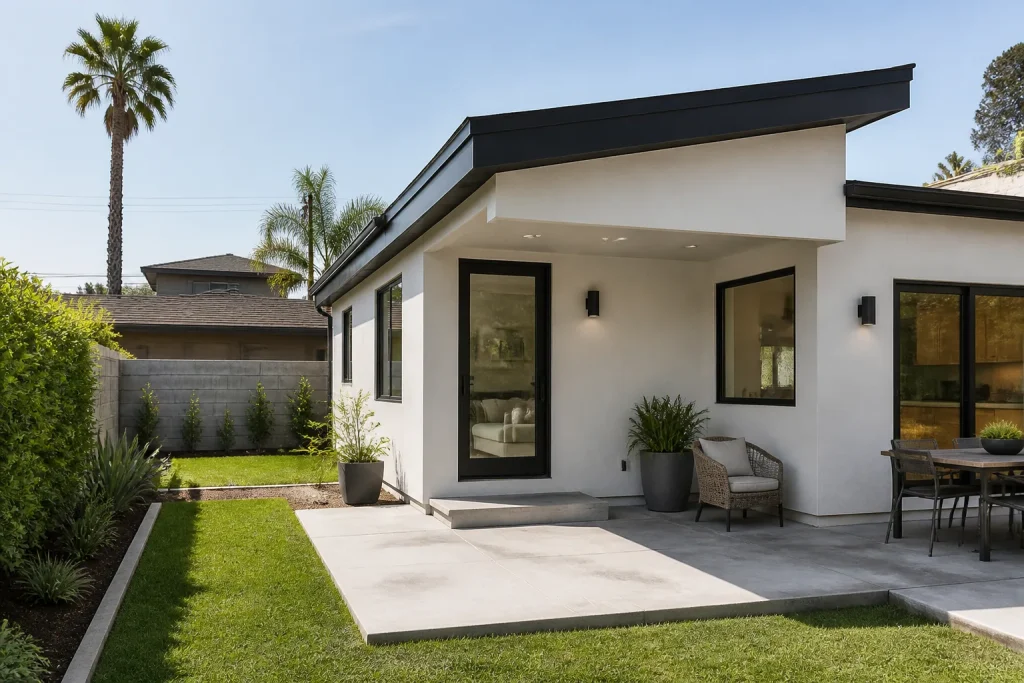
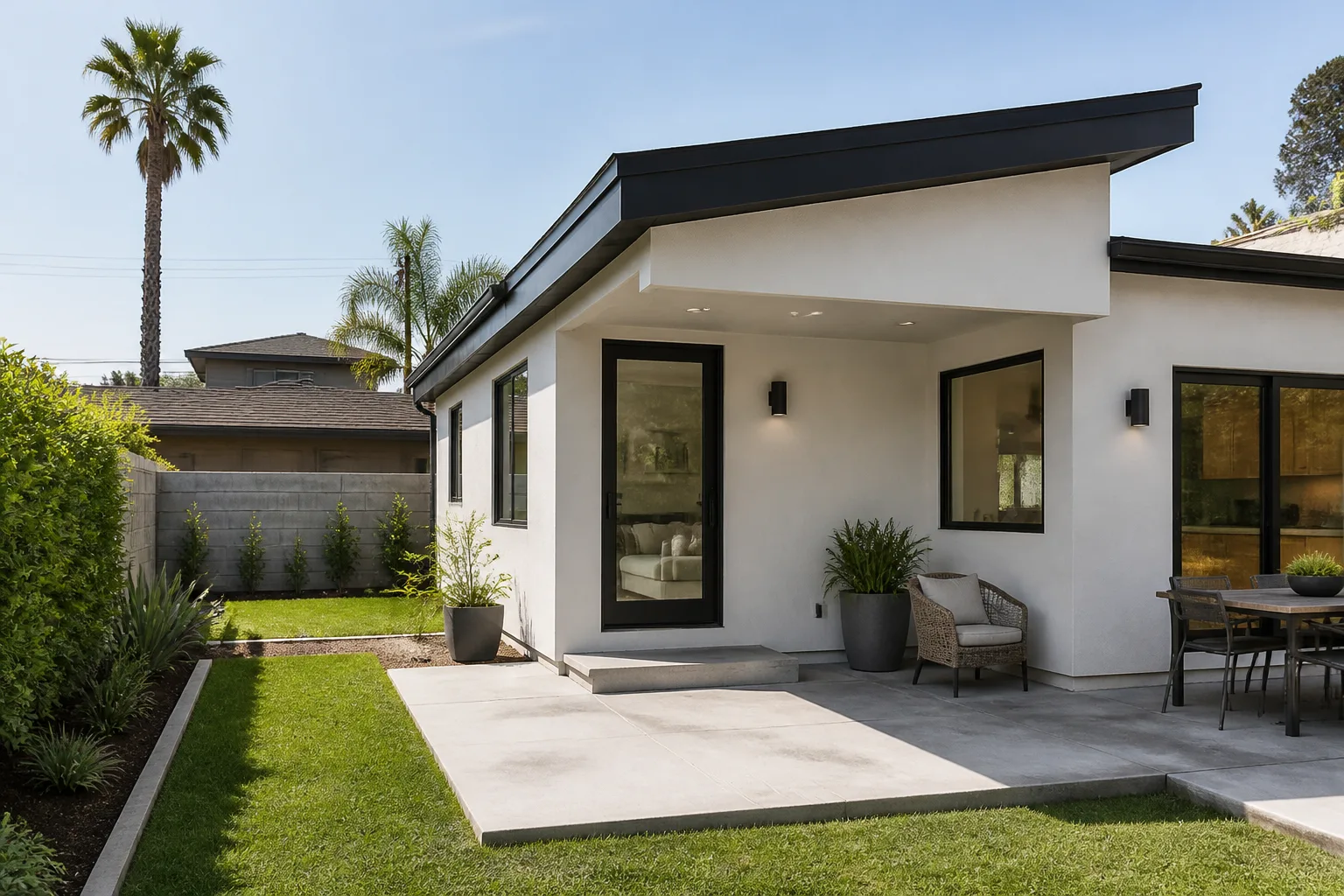
Dvele Home Addition Contractor in Los Angeles: A Homeowner’s Guide
Dvele homes arrive roughly 90% complete from the factory, which sounds like it cuts contractor time in half. The reality in Los Angeles: site prep, utility connections, and LADBS inspections can take just as long as a stick-built addition if the contractor hasn’t done this before. Finding a Dvele home addition contractor in Los Angeles means hiring someone who understands both the factory’s connection specs and the city’s permit process. Those are two different skill sets, and they rarely live in the same person. If you’d rather skip the homework, call (254) 602-5618 for a free estimate.
Key Takeaways
- Dvele units arrive 90% complete, but local site work typically adds $40K to $90K in Los Angeles on top of the factory price.
- Modular additions in LA need two approvals: state HCD approval for the factory process and local LADBS permits for the site work.
- The contract split between factory scope and local contractor scope is where most homeowners lose money. Get it in writing.
- Crane access, utility stub-outs, and grade requirements determine whether your lot is even ready for a Dvele delivery.
- Ask any contractor for proof of previous modular or prefab work before signing. The wrong hire turns a 90% complete home into a 6-month headache.
What Makes Dvele Different From a Standard Los Angeles Addition
Dvele builds high-performance, factory-built modular homes. The modules are framed, insulated, wired, plumbed, and finished inside a controlled facility, then trucked to your lot and set on a foundation. Most Los Angeles homeowners assume this means the local contractor’s job is small: show up, connect a few things, done. That assumption is expensive.
What arrives on the truck is a sealed building shell with factory-installed systems inside. What it doesn’t include is the connection work that makes it a permitted, livable home in Los Angeles: foundation interface, utility tie-ins, weatherproofing at the marriage lines, and all the site-specific detailing LADBS wants to see before final sign-off. A Dvele module is like a sweater that’s 90% knitted. The last 10% still requires someone who knows how to finish the seams without unraveling the whole thing.
We’ve seen Dvele projects go smoothly in neighborhoods like Westchester and Eagle Rock when the contractor had modular experience. We’ve also seen them stall for months in Sherman Oaks because the contractor was learning the process on the homeowner’s dime. The difference is rarely the factory. It’s the site work.
What “Site Readiness” Actually Means for a Dvele Delivery in Los Angeles
Before a Dvele module ever leaves the factory, your lot needs to be ready. Most Los Angeles homeowners hear “site prep” and picture a cleared space. The real list is longer.
- Crane access: A Dvele module isn’t carried in by hand. The crane needs a stable, level staging area with overhead clearance. In older Los Angeles neighborhoods with mature trees and overhead power lines, this can be the single biggest obstacle. Trees get trimmed. Lines get temporarily dropped. Sometimes the city requires a traffic control plan if the crane blocks a street.
- Utility stub-outs: Sewer, water, gas, and electrical connections must be stubbed to exact locations before the module arrives. Getting these wrong by six inches means cutting into a finished factory floor. That’s a change order, not a fix.
- Grade requirements: The foundation and surrounding grade need to slope away from the module at the right pitch. Dvele specifies this. LA rain isn’t heavy, but it’s enough to cause moisture issues at the marriage line if the grade is wrong.
- Foundation tolerance: Factory-built modules sit on foundations built to tight tolerances. A stick-built foundation can be off by an inch and nobody notices. Off by an inch on a Dvele installation, and the marriage line gap becomes a visible seam.
This is what a home addition contractor in Los Angeles should be quoting when they give you a site prep number. If they gloss over crane access or utility stub-outs, they haven’t done this before.
How to Split the Contract: Factory Scope vs. Local Contractor Scope
The single most common mistake we see with Dvele additions in Los Angeles is a contract that splits responsibility badly. The factory covers what happens inside their building. The local contractor covers what happens on your lot. Between those two scopes is a gap: the connection work, the site-specific detailing, the final inspections. If nobody owns that gap in writing, you own it.
Here’s how a clean split should look:
- Factory scope: module construction, interior finishes, factory-installed mechanical and electrical systems, delivery to the site. This comes from Dvele directly or through a dealer.
- Local contractor scope: demolition (if applicable), foundation, utility stubs, crane coordination, module setting, marriage line finishing, utility connections, site grading, and all LADBS inspections up to final approval.
- The gap nobody writes down: who fixes a factory defect discovered on site? Who pays if the module arrives damaged? Who handles the interface between factory-installed systems and the utility grid? Get this in writing.
We tell every Los Angeles homeowner to ask one question before signing anything: “If the module arrives and something’s wrong, who resolves it and who pays?” The answer should be immediate and specific. If it’s a shrug, keep looking.
This is where experience matters. A contractor who has installed Abodu, Cover, or Mighty Buildings units in Los Angeles has already worked through these gaps. A contractor doing their first modular project will be figuring it out on your schedule.
Los Angeles Permitting for Modular Additions: Two Approvals, Not One
Los Angeles treats modular additions differently from stick-built work, and the permitting path surprises most homeowners. A Dvele addition needs two separate approvals:
- State HCD approval: The California Department of Housing and Community Development reviews the factory’s plans and construction process. This happens before your module ever gets built. It covers the module itself: structural design, electrical, plumbing, mechanical. Dvele handles this. You won’t see the paperwork, but it has to exist.
- Local LADBS site permits: The Los Angeles Department of Building and Safety reviews what happens on your lot: foundation, utility connections, site grading, setbacks, and zoning. This is your local contractor’s job. LADBS doesn’t care whether your addition is modular or stick-built here. They care that the site work meets Los Angeles code.
The two approvals don’t talk to each other. Your local contractor needs to understand what HCD approved so the site work matches the module’s specs. When these aren’t coordinated, you get a permit revision, which means a delay, which means your crane gets rescheduled, which means money.
When to call a pro: If you’re reading this and already dreading the LADBS counter, you’re not alone. This is the part where an experienced ADU builder in Los Angeles earns their fee. Permitting for modular work isn’t harder than stick-built. It’s just different, and the difference is expensive to learn on your own.
What Does Site Prep and Connection Work Actually Cost in Los Angeles?
Let’s put real numbers on the table, because Los Angeles homeowners deserve a ballpark before calling anyone. The Dvele unit price is set by Dvele. The site work is what your local contractor quotes, and in Los Angeles that typically lands between $40,000 and $90,000 on top of the unit price.
Here’s how that breaks down, based on projects we’ve quoted and completed across Los Angeles:
- Foundation: $15,000 to $35,000 depending on soil conditions, slope, and whether you’re doing a crawl space or slab. Los Angeles hillside lots run higher.
- Crane and module setting: $8,000 to $20,000. Tight street access in neighborhoods like Silver Lake or Highland Park pushes this up.
- Utility connections: $10,000 to $20,000. Distance from the main, panel upgrades, and LADWP requirements all factor in.
- Site grading and drainage: $3,000 to $8,000.
- Permits and inspections: $3,000 to $7,000 for LADBS site permits and fees.
These are real Los Angeles numbers, not national averages. National contractors will quote lower because they don’t know what LADBS inspections cost or what a crane closure on a narrow Hollywood street involves. A contractor that’s done Dvele work in Los Angeles already knows what the city will require, and their quote will reflect that.
Lodgewick puts the written price in front of you before any work starts. No change orders at the door. If the site work comes in under quote, you save. If it comes in over, that’s our problem, not yours. That’s the whole point of The Kingswell Guarantee.
Questions to Ask Any Contractor About Their Modular Experience
Before you hire a Dvele home addition contractor in Los Angeles, run through these five questions. The answers will tell you more than any review could.
- “How many modular or prefab installations have you completed in Los Angeles?” Not additions in general. Modular specifically. The number should be at least three. If they can’t name the neighborhoods, they haven’t done it.
- “Walk me through the crane access plan for my street.” An experienced contractor will ask about your lot, your trees, your power lines, and then describe the plan. A novice will say “we’ll figure that out on site.” That’s a red flag.
- “What happens if the module arrives with a defect?” They should have a written process for documenting factory defects, contacting the manufacturer, and resolving it without you playing middleman.
- “Who pulls the LADBS permits and handles inspections?” The answer should be the contractor, full stop. If you’re pulling your own permits, you’re also taking on liability for anything that goes wrong.
- “Can you give me the written price before we start?” If the answer is anything other than yes, walk. Price-before-work is the minimum standard. We call it The Kingswell Way: say the price before the work, show up in the window given, leave the place cleaner than found, put the guarantee in writing, come back if it fails.
Related services in Los Angeles: garage conversion contractor in Los Angeles and Lodgewick ADU Builders home.
The Bottom Line
Dvele makes a genuinely high-quality modular home, and for the right Los Angeles lot, it’s a smart way to add space. The risk isn’t the factory. It’s the gap between the factory and your foundation. Crane access, utility stubs, grade tolerance, permit coordination: these are local problems that need a local contractor with modular experience.
In our experience, most Dvele projects in Los Angeles go smoothly when the homeowner hires a contractor who has actually done modular work here. They go badly when someone learns on the job. Ask the five questions. Get the contract split in writing. And if you want a straight answer on what your site prep will cost, call us. If you’re in Los Angeles and need help with a Dvele addition, Lodgewick ADU Builders offers free estimates, call (254) 602-5618. We’ll walk your lot, check the crane access, and give you a written price with no surprises.
Frequently Asked Questions
From foundation to final inspection, expect 6 to 10 months in Los Angeles. The factory build is faster than stick framing, but LADBS permit review, utility connections, and crane scheduling add time most homeowners don’t anticipate. A contractor with modular experience can sequence these steps to avoid idle time between the foundation and the module delivery. Call (254) 602-5618 for a realistic timeline for your specific lot.
Not necessarily. The Dvele unit price is competitive, but Los Angeles site work adds $40K to $90K on top. On a flat lot with easy access, a Dvele addition can come in 10% to 20% under stick-built. On a hillside lot with tight crane access, the savings shrink or disappear. The real advantage is quality control and a shorter on-site construction window. Call (254) 602-5618 for an exact quote for your property.
Yes, and there are two parts. The module itself is covered by California HCD approval, which Dvele secures at the factory level. Your local contractor handles LADBS site permits for the foundation, utilities, and grading. These two approvals must align, which is why hiring a contractor with modular experience in Los Angeles matters. We handle the full LADBS process as part of every project.
With Lodgewick, no. The written price you get before work begins is the price you pay. Site conditions sometimes reveal surprises, but discovering them is our job during estimation, not yours at change-order time. Every project includes a written guarantee, and if anything isn’t right within 365 days, we come back and make it right at no charge. Call (254) 602-5618 to schedule your free estimate.
Written by Russ Delmar, Owner at Lodgewick ADU Builders, serving Los Angeles since 2010.
Need ADU Help?
Call Lodgewick ADU Builders - licensed & insured, here with fast after-hours help in Los Angeles.
(254) 602-5618