
Dvele Site Prep & Utilities: The Los Angeles Owner’s Guide
Site prep and utility work for a Dvele home in Los Angeles typically runs $12,000 – $38,000 depending on your lot’s slope, soil condition, and how far the utility lines need to travel from the street. We stock and coordinate the full scope: excavation, grading, trenching, water, sewer, electrical service, gas, and the foundation pad your Dvele module set will sit on. Most Los Angeles owners discover gaps here after a site survey comes back with surprises, or when a previous contractor walked off leaving trenches open and permits half-pulled.
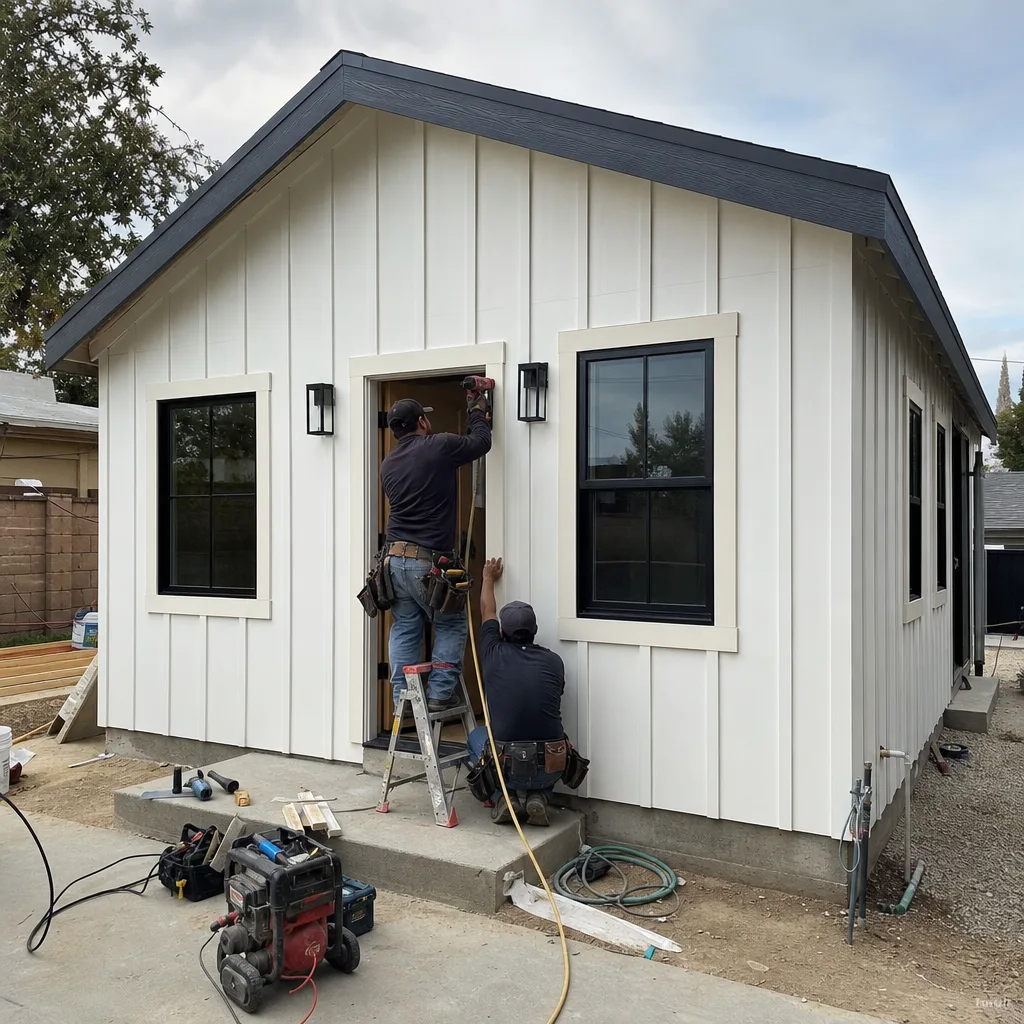
The bigger issue with Dvele specifically is that the factory-built modules need precise foundation tolerances and utility stub-outs positioned to within a fraction of an inch. A standard foundation crew that’s never worked with prefab panels will set your project back weeks. If your site prep was done wrong or incompletely, the symptoms show up fast: water pooling where it shouldn’t, electrical service that won’t pass LADWP inspection, or a foundation that’s out of square for your module set. We fix all of it, and we write the price down before we move dirt.
Which Dvele Models This Applies To
Dvele builds several model lines, and the site prep requirements shift meaningfully between them. The Dvele IQ series (models like the IQ 325, IQ 500, and larger configurations) uses steel-framed modules that still require a concrete foundation system, typically with precise anchor bolt placement and utility stub-outs coordinated through the factory’s shop drawings. The Dvele Adapt line is more flexible on lot geometry, but the utility demand is similar: 200-amp electrical service, standard 3/4-inch or 1-inch water service depending on fixture count, and a sewer lateral sized to Los Angeles Department of Building and Safety code for your specific connection point.
Here’s what most owners miss: the model name isn’t enough. You need the foundation plan set that came with your Dvele order, which specifies exact anchor bolt patterns, embedded conduit locations, and the utility stubs’ elevations. If you’re inheriting a partially-prepped lot or replacing a contractor who abandoned the job, we match what’s in the ground against those drawings. When there’s a mismatch, we document it and give you the repair number in writing before any new work starts.
On OEM vs. aftermarket: for site prep and utilities, there’s no “Dvele-branded” pipe or wire to buy. What matters is code compliance and material spec: Schedule 40 PVC for sewer, Type K copper or PEX-A for water, and conduit sized for the feeder wire your panel requires. We use materials that meet or exceed Los Angeles code, and we’re not loyal to any single supplier. If a less expensive material does the job without compromising the 365-Day Done Right Promise, we’ll tell you that.
We also work with Abodu and Cover models, so if you’re considering a different prefab path or already have one on your lot, we can speak to the differences in what each factory expects from the site.
Signs Your Dvele Site Prep & Utilities Is Failing
- Water ponding near the foundation or along the trench lines. This usually means the grading wasn’t sloped correctly, or a buried drain line has shifted. In Los Angeles’s clay-heavy hillside soils, even a 2% grade error will hold water and eventually compromise the foundation edge.
- Electrical service that won’t pass LADWP inspection. Common causes include undersized conduit, wrong burial depth (24 inches minimum for direct burial, 18 with concrete cover), or missing pull boxes. This isn’t a “fix later” item; it stops your whole project.
- Sewer line that backs up or drains slowly within the first year. We see this when the lateral was laid at the wrong slope, or a previous contractor used thin-wall pipe that collapsed under backfill weight.
- Cracks in the foundation pad before modules arrive. Los Angeles’s expansive soils (especially in areas like Eagle Rock, Highland Park, and the San Fernando Valley) will crack an under-engineered slab within a season. Dvele’s shop drawings assume a stable, level base; a cracked pad means rework.
- Utility stubs that don’t match the Dvele plan elevations. If the water, sewer, or electrical stub-out is off by more than an inch from the shop drawings, the factory’s connection sequence gets complicated. We’ve corrected stubs that were a half-foot off because the original crew guessed instead of reading the drawings.
Replacement Cost & What’s Included
For a full site prep and utility package in Los Angeles, here’s the honest range we quote most often:
| Scope | Typical Los Angeles Range |
|---|---|
| Full site prep: excavation, grading, compaction, foundation pad | $9,500 – $22,000 |
| Utility trenching and install: water, sewer, electrical conduit | $3,500 – $9,500 |
| Foundation repair or re-level (existing pad, failed work) | $2,500 – $12,000 |
| Standalone utility correction (one line, stub relocation) | $1,200 – $4,500 |
The range comes down to three things: how much dirt has to move, what’s already in the ground, and how far the utilities need to travel. A flat lot in the Valley with short utility runs will land at the bottom. A hillside lot in Mount Washington with a 60-foot sewer lateral and rocky excavation will land at the top, sometimes beyond it. Parts and labor are shown separately on every quote, and the price we put in writing before we start is the price you pay. No change orders unless you change the scope. Every job includes our written 365-Day Done Right Promise: if something fails within a year, we come back and make it right at no cost to you.
DIY or Call Us?
There are things you can safely do yourself to understand the problem better. Walk the lot after rain and mark where water pools. Compare your Dvele shop drawings against the stubs you can see, and note any obvious mismatches. Take photos. That kind of documentation helps us quote faster and more accurately.
But I have to be direct here: trenching, grading, sewer work, and electrical service are not DIY territory. An open trench deeper than 4 feet can collapse and bury someone. Hitting a buried gas line or LADWP feeder while digging kills people. Los Angeles has strict trench-shoring and utility-marking requirements for exactly this reason, and the permitting penalties for unpermitted sewer or electrical work will exceed what you’d pay a licensed crew to do it right the first time. If you’ve got a failed site prep or utility issue on a Dvele project, call us at (254) 602-5618. We’ll walk the site, tell you what’s actually wrong, and hand you a written number before any work begins.
FAQs
A properly engineered foundation pad and utility installation should last the life of the home, meaning 50 years or more. What fails early is almost always the workmanship: a trench that settled, a stub placed in the wrong spot, or conduit that wasn’t buried deep enough. In Los Angeles’s soil and seismic conditions, the first year is when installation errors show themselves, which is why our 365-Day Done Right Promise covers exactly that window. If you’re seeing issues in year one, call (254) 602-5618 and we’ll schedule a free return visit.
Mostly yes. A foundation pad with minor cracking can often be repaired with epoxy injection or partial re-pour; utility stubs that miss the Dvele drawings by a few inches can usually be relocated without tearing everything out. Full replacement is only necessary when the original work is so far out of spec that patching would be throwing good money after bad. We give you a straight answer either way, with the repair price and the replacement price side by side, so you can make an informed call. Call (254) 602-5618 and we’ll walk your lot and tell you what we’d do.
A single utility stub correction usually takes one to two days, plus the time for LADWP or DWP inspection if electrical is involved. Grading fixes and foundation repairs run three to seven days depending on the scope and whether we’re removing and replacing concrete. Los Angeles permitting and inspection scheduling adds time, but we handle all of that: permits pulled, inspections scheduled, final sign-off delivered to you in writing. Pipe, conduit, and standard fittings are stocked on our trucks, so there’s no two-week wait for parts once we’re on site.
We keep Schedule 40 and Schedule 80 PVC, PEX-A in common diameters, copper, conduit, pull boxes, and standard anchor hardware on our trucks. For the big items like transformer-ready panels or specialty foundation forms, we order from suppliers in the Los Angeles basin and have them on site within a few days. If it’s a Dvele-specific spec, we coordinate directly with the factory’s drawings so the parts that arrive actually match what the modules expect. Call (254) 602-5618 to schedule your free estimate, and we’ll tell you exactly what’s on hand and what we’ll need to order.
Written by Russ Delmar, Owner, Lodgewick ADU Builders at Lodgewick ADU Builders, serving Los Angeles and nearby areas.