
James Hardie Junior ADU Conversion: The Los Angeles Owner’s Guide
If you’re searching for a James Hardie junior ADU conversion in Los Angeles, here’s the straight answer: a JADU conversion, which is a second small living unit built out of your existing home’s footprint, typically runs $110,000 to $190,000 in LA when it involves James Hardie siding, trim, and HardieBacker on the interior wet areas. Most Los Angeles homeowners discover this need when they realize their garage or under-used back bedroom is just sitting there while an aging parent or adult child needs a place to live, and the usual first question isn’t about siding at all, it’s whether the space can even legally become a JADU. The short version: if you have a permitted garage or attached space with its own access pathway and proper ceiling height, the answer is usually yes, but the James Hardie part matters more than most people expect because Los Angeles sun and moisture cycles test siding and trim harder than almost anywhere in the country.
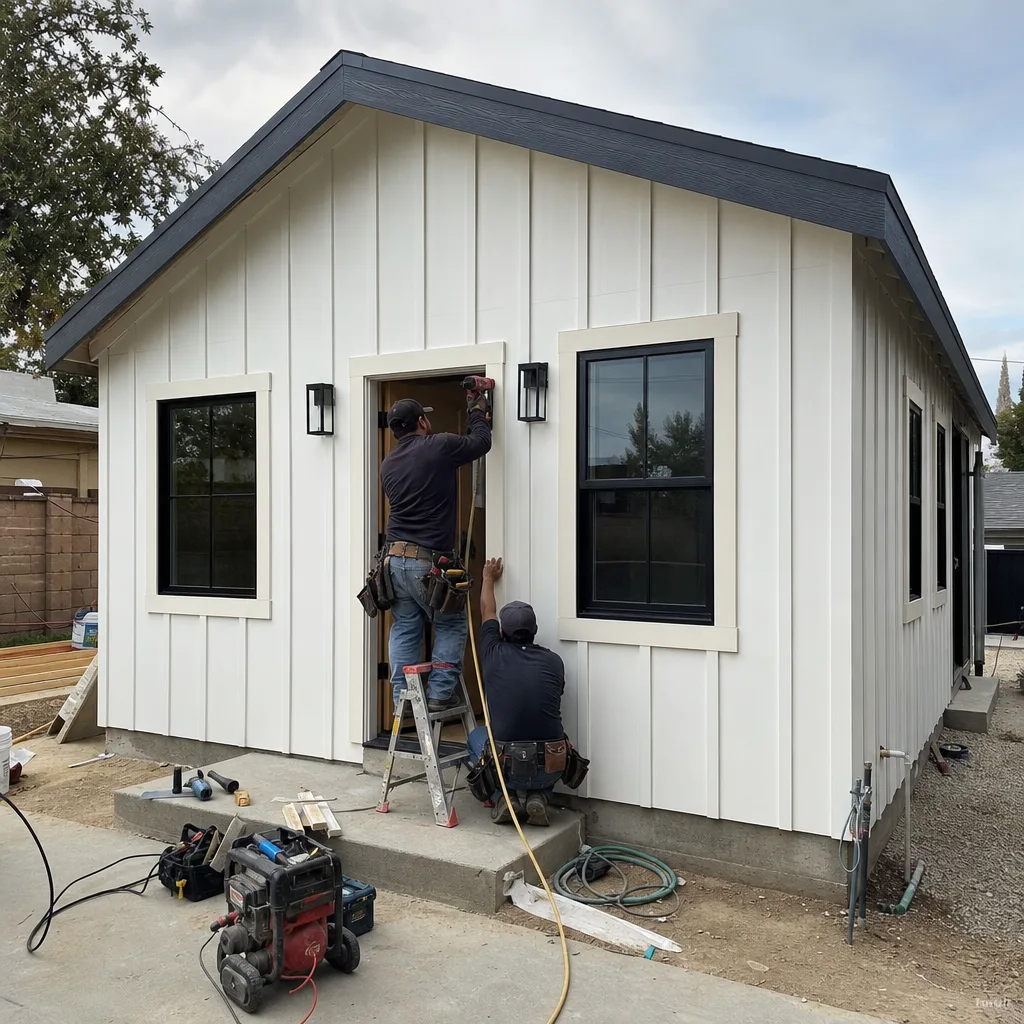
Let’s be practical about what fails in these conversions. When we walk a Los Angeles property for a JADU conversion, the James Hardie materials are rarely the thing that broke first. What fails is the half-measure install from a previous owner: HardiePlank lap siding that was butt-joined too tight and buckled when the sun hit it, trim boards caulked instead of properly gapped, HardieBacker that got wet behind a cheap shower surround. The conversion itself, the idea of it, is sound. It’s the execution that usually isn’t, and that’s where a straight parts-and-install conversation has to start.
Which James Hardie Models This Applies To
James Hardie makes several product lines that show up in Los Angeles JADU conversions, and they’re not all interchangeable. HardiePlank lap siding is the classic horizontal board, available in 5.25-inch and 8.25-inch exposures, and it needs a specific nail schedule and joint flashing system to survive LA’s wet-winter-dry-summer swings. HardiePanel vertical siding is common on garage-side conversions where owners want a cleaner modern look. HardieTrim boards, which come in 4/4 and 5/4 thicknesses, are what frame the windows and doors and corners, and they’re the first thing that shows paint failure in direct Los Angeles sun. Inside, HardieBacker cement board, usually half-inch, is the water-resistant substrate behind tile in the JADU’s kitchen and bath.
Here’s the compatibility gotcha most Los Angeles owners don’t know: HardiePlank from a big-box store and HardiePlank sold through a lumberyard to a contractor are the same product, but the color and texture lots differ, and if a repair is done with a mismatched lot on a south-facing Los Angeles wall, it stays visible for years. We buy through the same channels but inspect the lot codes before install. As for OEM versus aftermarket, James Hardie doesn’t license aftermarket equivalents for the boards themselves. You either get James Hardie or you get a lookalike fiber cement, and fiber cement is not all made equal; the density and freeze-thaw and moisture resistance of true Hardie product is what you’re paying for. For flashing, joint treatment, and fasteners, there are quality alternatives, and we’ll tell you when they make sense and when they don’t.
Signs Your James Hardie Junior ADU Conversion Is Failing
These symptoms are the ones we see most on Los Angeles JADU conversions, and each one has a specific cause we can trace on a walkthrough:
- Paint peeling in sheets on the south or west walls. This usually isn’t a paint problem; it’s moisture getting behind the siding because the original installer caulked the butt joints instead of leaving the required gap and using flashing. Los Angeles sun bakes the caulk, it cracks, and water wicks in.
- Wavy or buckled lap siding on the lower courses. The boards were nailed too tightly or too close to the edge, and the natural expansion cycles of wet LA winters followed by 95-degree Santa Ana days pushed them out of plane.
- Trim boards swelling at the corners or around the JADU’s separate entry door. End cuts weren’t sealed, or the trim was installed tight against a walkway with no kickout flashing, and capillary action pulled water up from the ground.
- White chalky residue running down from window trim. This is efflorescence from moisture moving through the fiber cement, and it means water is sitting somewhere it shouldn’t be behind or above the trim line.
- Soft or bubbled drywall near the JADU kitchen or bath floor. The HardieBacker behind the tile was never properly sealed at the transition to the floor, and shower water or sink overflow is wicking into the wall cavity.
None of these fix themselves. Every month they’re left alone, the repair footprint grows, and in Los Angeles where a JADU is a rental asset, a failed siding or wet-wall issue is a tenant complaint and a code violation waiting for the next inspection.
Replacement Cost & What’s Included
There isn’t one flat price for a James Hardie junior ADU conversion in Los Angeles, because every property starts from a different point. A straight siding and trim replacement on an existing JADU that’s already permitted and structurally sound usually lands between $28,000 and $55,000, depending on the wall square footage, the number of trim pieces, and whether we have to strip back to the sheathing. A full JADU conversion from raw garage or attached space, including Hardie siding, new window and door trim, HardieBacker in the wet areas, and the structure to make it a legal dwelling, runs the $110,000 to $190,000 range in Los Angeles depending on site conditions, slab work, and whether new utility runs are needed.
The parts-and-labor transparency is simple: we give you a written price before any work starts, and that price line-items the Hardie siding, trim, flashing, fasteners, and tile backer separately from the labor. You can see exactly what the James Hardie materials cost and exactly what the crew’s time costs. Every James Hardie JADU conversion we do in Los Angeles includes our 365-Day Done Right Promise in writing: if something wasn’t done right, we come back and make it right at no charge. That includes a free return visit if the work fails within the guarantee period.
DIY or Call Us?
There are safe things to check yourself. Pull a loose piece of siding back gently and see if the weather-resistant barrier behind it is torn or missing; look at the butt joints and see if they’re caulked shut or properly flashed; run a hose along the base of the wall and watch where water pools. None of that requires tools.
Where DIY goes wrong on a James Hardie JADU conversion is the actual replacement work. Cutting fiber cement releases silica dust that requires proper respiratory protection. Fastening HardiePlank correctly means controlling nail depth within a sixteenth of an inch; drive a nail too deep and the board fails at the fastener line, too shallow and it telegraphs through the paint. The trim details around the JADU’s separate entrance are where water gets in if they’re wrong by a quarter inch. And then there’s the matter of Los Angeles building permits: a JADU’s exterior envelope changes often require a permit, and the inspector will check the nailing pattern. If you’ve got a siding mockup question or you want someone to look at what you’ve got, call (254) 602-5618 and we’ll tell you honestly whether it’s a weekend project or a call-us job.
FAQs
James Hardie siding and trim are warrantied for 30 years on the product itself, but in Los Angeles the realistic lifespan between repaints and repairs is 12 to 18 years on south-facing walls because UV exposure breaks down the paint film faster than anywhere the manufacturer tests in the Pacific Northwest. The boards themselves will last decades if the install details are right; it’s the paint cycle that drives maintenance on a Los Angeles JADU.
Yes, if the failure is localized, we can cut out the damaged HardiePlank courses or the affected HardieTrim boards and splice in new material with proper flashing at the repair joints. What you can’t do is repair delaminated HardieBacker behind tile; that has to be pulled and replaced because the board’s structural water resistance is compromised once it’s soaked and dried repeatedly. We’ll tell you which category your wall falls into before we quote anything.
A full exterior siding and trim replacement on a standard 400-to-600-square-foot Los Angeles JADU takes our crew 5 to 8 working days, with an extra day if we’re replacing HardieBacker inside a bath or kitchen. The permit wait in Los Angeles is usually the longer part, running 2 to 6 weeks depending on the specific neighborhood’s plan check load.
We stock common HardiePlank exposures, HardieTrim profiles, flashing, and fasteners in our Los Angeles service vehicles, and we pull the exact lot-matched siding for your wall color from our supplier before the crew arrives. For a full JADU conversion, we order the Hardie materials for the whole job at once so the lot codes match across every wall. Call (254) 602-5618 and we’ll check what we have for your specific repair.
Written by Russ Delmar, Owner, Lodgewick ADU Builders at Lodgewick ADU Builders, serving Los Angeles and nearby areas.