
James Hardie Site Prep & Utilities: The Los Angeles Owner’s Guide
If your James Hardie siding or trim install is stalled because the ground isn’t level, drainage isn’t right, or the utility stub-outs don’t line up, we handle the site prep and utility rough-in that gets the job moving again. Typical site prep and utilities work for a James Hardie project in Los Angeles runs $1,800 to $6,500 depending on slope, soil, and how far the utility lines need to travel. Most owners call us when they realize the lot itself, not the siding, is what’s holding up the project.
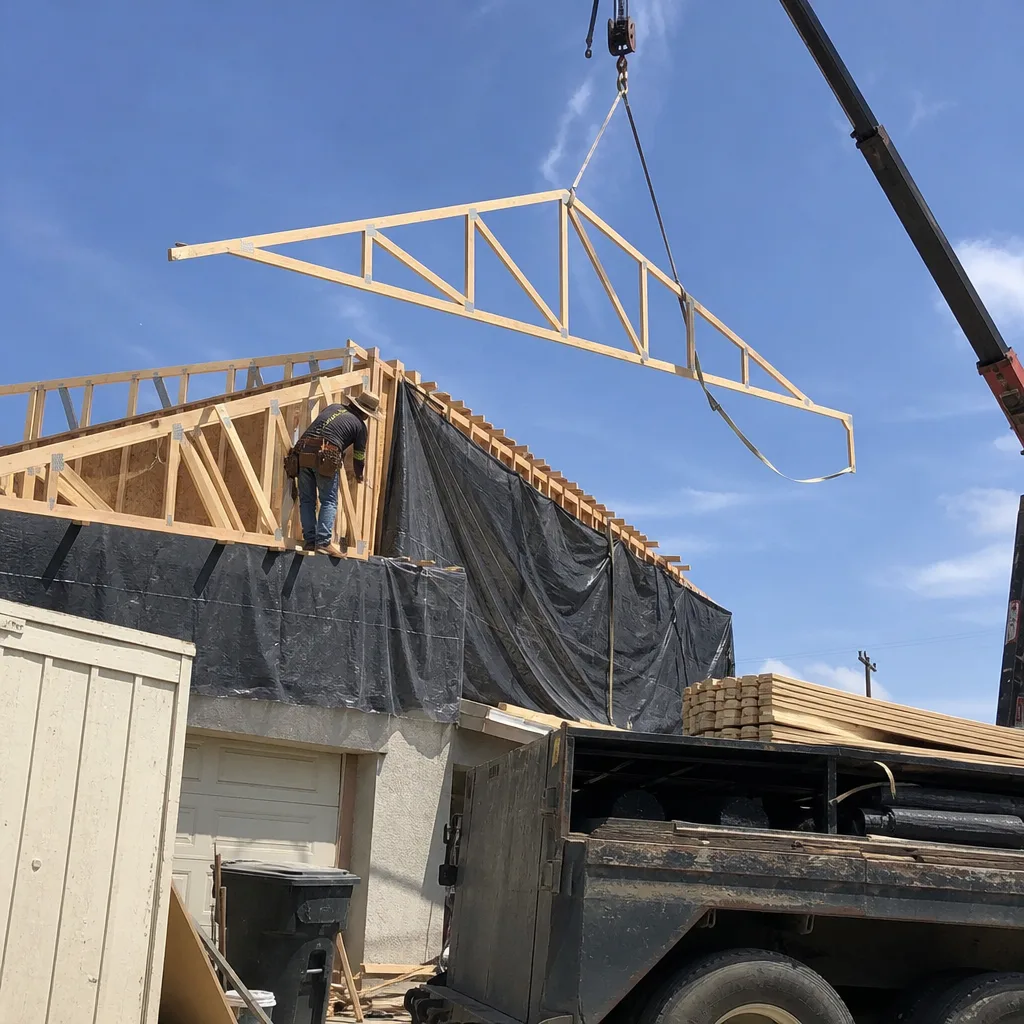
Here’s what that usually looks like: a homeowner has the HardiePlank or HardiePanel sitting in the garage, the crew’s scheduled, and then someone notices water pooling against the foundation after a winter rain. Or the gas line for the new ADU kitchen is three feet short of where the plans say it should be. Or the pad for the new accessory dwelling unit has a two-inch slope over ten feet, and backer rod plus caulk alone won’t fix what the grade is doing wrong underneath. That’s when site prep and utilities stop being a line item and start being the reason nothing else can happen.
Which James Hardie Models This Applies To
Site prep and utilities work touches every James Hardie product line, but how it affects each one differs. HardiePlank lap siding and HardiePanel vertical siding both insist on a minimum 6-inch clearance from finished grade to the bottom edge of the siding. That number isn’t a suggestion from us; it’s what Hardie’s installation manual calls for, and in Los Angeles, inspectors do check it. HardieBacker board used as exterior sheathing behind stucco or stone has the same exposure concern: if grade is too high, if water wicks up, the board absorbs it, and you’ll see delamination at the edges within two or three seasons.
The gotcha we keep seeing in LA: homeowners assume the siding is the project, when really the soil under it is the problem. Expansive clay soil in the San Fernando Valley and parts of the Eastside moves more than people expect between dry season and rain season. A pad that measures dead level in September can be a quarter-inch off by February. That movement telegraphs straight up into your James Hardie trim boards, and you’ll see gaps open at the corners of fascia and around window surrounds.
On the OEM versus aftermarket question: there’s no such thing as a “James Hardie” footing or drain line. Site prep and utilities are built to code using standard materials, PVC, ABS, galvanized and brass fittings, compacted base rock. The product-specific part is understanding what clearance and exposure requirements the James Hardie material you’re using actually needs, then making the ground and utilities honor those numbers. We stock the common fittings, hose bibs, gas stub-out risers, and drain components on the truck so a site visit doesn’t turn into three separate runs to a supply yard in Commerce.
Signs Your James Hardie Site Prep & Utilities Is Failing
- Water pooling against the foundation within 24 hours of rain. The grade has settled or was never sloped correctly. James Hardie products will tolerate moisture but not standing water at the base; this is the most common call we get in Los Angeles after a heavy storm season.
- Gaps opening between trim boards and siding at the corners. Soil movement underneath the structure is shifting the framing. If you re-caulk without fixing the grade or the drainage first, the gap comes back, usually wider.
- Utility stub-outs that don’t match the plan dimensions. If the gas riser, cleanout, or hose bib is even an inch off where the plans show it, the James Hardie siding has to be cut around it or the utility has to move. Fix the utility before the siding goes up.
- Erosion channels visible in the soil near the structure. Runoff from roofs or neighboring slopes is cutting paths through your yard and carrying soil away from the pad. That loss of base support shows up later as a cracked walkway or a drooping section of HardiePanel.
- Spongy or soft ground near where a footing will go or already sits. Over-irrigated landscaping in LA, especially in the flats near the LA River, keeps soil saturated. You can’t pour on that or trust what’s already poured on that until drainage is fixed.
Replacement Cost & What’s Included
For a standard single-family lot in Los Angeles, we typically price site prep and utilities between $1,800 and $6,500 installed. The spread is real and it’s driven by specifics: a flat pad in Torrance with utilities already stubbed within five feet of the build is the low end. A hillside lot in Silver Lake or Mount Washington where the water line has to run seventy feet, a retaining cut is needed, or the gas line has to be re-routed around a mature oak, that’s the high end.
Every quote includes the same things: a written line-item price before any work begins, the cost of permits when they’re required, all trenching and backfill, the materials, and the labor. You won’t get a change order three days in because we “discovered” something we should have priced from the plans. The work carries the Kingswell Guarantee, which includes the 365-Day Done Right Promise: if something fails within a year, we come back and make it right, free. That promise is in writing, on every project, before the first day of work.
DIY or Call Us?
What you can safely check yourself: where water pools after rain, whether your downspouts daylight at least five feet from the structure, and whether your utility stub-outs match the measurements on your approved plans. All of that is walk-around work with a tape measure and a notepad.
What you shouldn’t do yourself: anything involving a gas line. In Los Angeles, moving or extending a gas line requires a permit, a pressure test, and an inspector’s sign-off. A bad gas connection kills people, not projects. Same goes for cutting into a hillside without knowing what’s behind the soil. We handle the trenching, the drainage, the utility rough-in, and the permitting. If you’re not sure whether your issue is a site problem or a siding problem, call (254) 602-5618 and describe what you’re seeing. We’ll tell you honestly what’s going on.
FAQs
Done right, the drainage, grade, and utility rough-in we install should last the life of the structure, typically 30 to 50 years in Los Angeles conditions. The components that wear faster are the visible ones, hose bibs, cleanout caps, and any above-ground valves, and those are simple replacements. Call (254) 602-5618 if you’re seeing settling or pooling after the first full rain season.
It depends on the failure. A clogged drain line, a sunken section of grade, or a misaligned stub-out is usually a repair. A foundation pad built on uncompacted fill or a gas line run without a permit is often a redo, and it’s cheaper to redo it before the James Hardie siding is up than after. We’ll tell you which one you have when we look at it.
A standard flat-lot job with utilities already stubbed within ten feet usually takes two to four working days, including inspection. Hillside work or anything requiring a retaining cut or a new gas line from the meter can run one to two weeks. We’ll give you a defined arrival window and a written schedule before we start, and that schedule is part of the Kingswell Guarantee.
Our trucks carry the common site prep and utility components: PVC and ABS fittings, schedule 40 pipe, compression couplings, hose bibs, cleanout fittings, gas risers, and base rock. Specialty items like a specific valve required by LADBS take a day or two to source. We tell you upfront what’s on hand and what has to be ordered, so there’s no surprise delay.
Written by Russ Delmar, Owner, Lodgewick ADU Builders at Lodgewick ADU Builders, serving Los Angeles and nearby areas.