
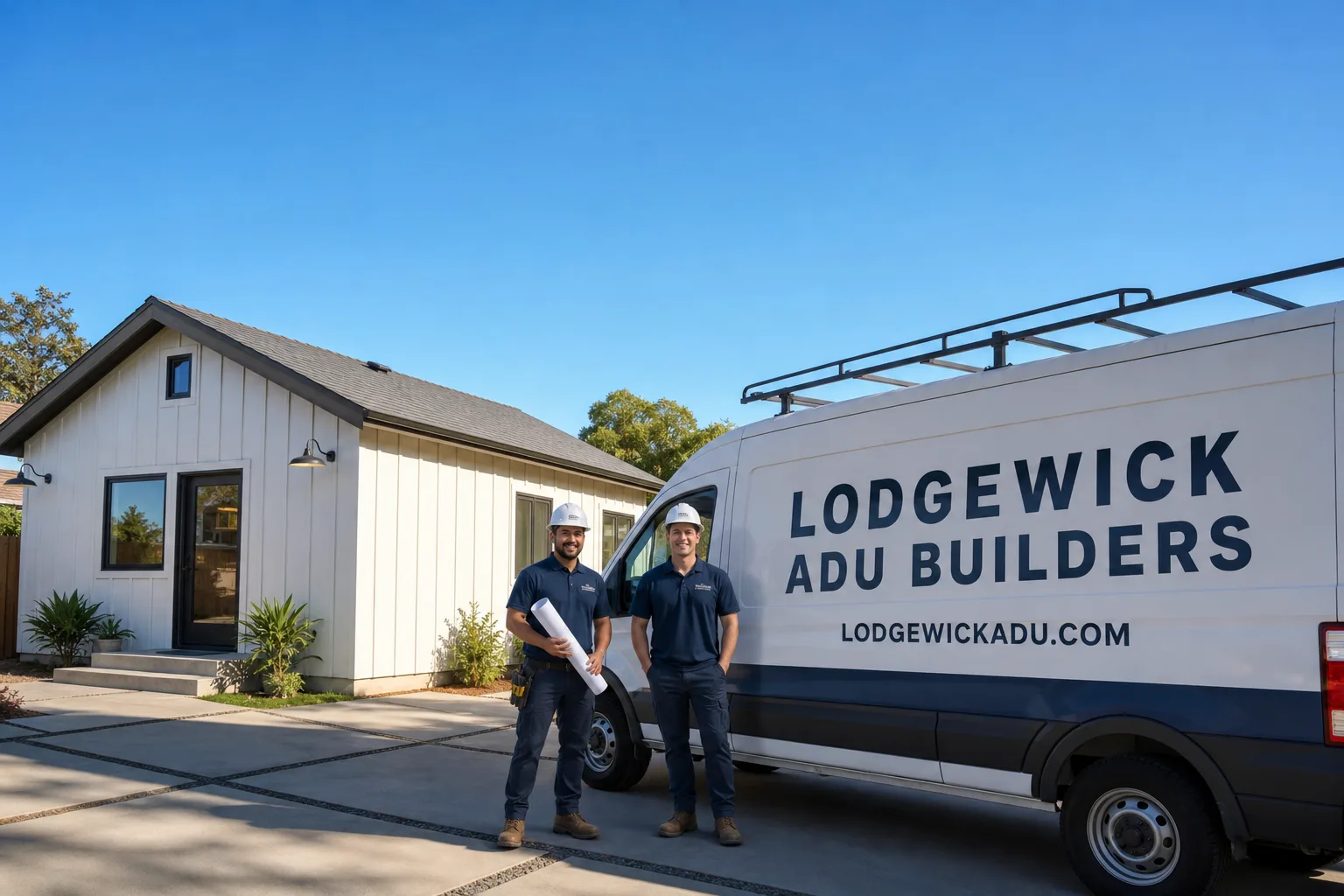
Fast, Reliable Home Addition Contractor Across Koreatown
Home additions in Koreatown run $180 – $420 per square foot depending on scope, with a typical room addition landing between $85,000 and $185,000. That’s a real number, not a teaser. If you own a 1960s dingbat with a tuck-under parking bay, or a 1920s courtyard bungalow apartment building near Wilshire, you’re sitting on square footage most contractors won’t touch because the permitting is complicated. We do. Call (254) 602-5618 and we’ll give you a written price before any work starts.
Why Lodgewick ADU Builders Is Koreatown’s Preferred Home Addition Contractor Company
Koreatown’s housing stock isn’t like the rest of Los Angeles. You’ve got dingbat soft-story apartments layered over courtyard bungalows, single-family lots are almost nonexistent, and nearly every addition involves working within an existing multifamily envelope. That’s our wheelhouse. Our crews know the LADBS plan-check reviewers who handle tuck-under conversions in this part of the city, we’ve pulled permits on buildings along Western Avenue and Vermont Avenue, and we understand that a ground-floor conversion on South Kenmore has different moisture and ventilation needs than a detached backyard unit in Los Feliz. Russ Delmar leads our Koreatown work, and his answer to every scope question is the same: a written number, not a shrug.
Sunroom Addition in Koreatown
A sunroom addition in Koreatown typically runs $45,000 – $95,000 for a permitted, insulated space with proper glazing, and it’s one of the smarter ways to add rentable or livable square footage to a courtyard bungalow without triggering a full structural rebuild. Koreatown’s density means your sunroom will likely face an interior courtyard or a neighboring wall, not open sky, so glazing selection and thermal performance matter more here than in a spread-out suburb. We spec Low-E glass and marine-grade aluminum frames as standard, because the coastal air will find cheap frames and eat them within a decade.
What the build actually involves
Framing, glazing, insulation, flooring, and electrical, tied into the existing structure with proper flashing and weep drainage. On a 1920s courtyard bungalow, we’re usually matching stucco and roofline so the addition doesn’t look bolted on. On a larger dingbat, we’re often enclosing an existing patio or balcony space that’s already structurally adjacent.
When it’s worth doing
If you need a home office, a light-filled rental unit, or a dining space that opens to a courtyard, a sunroom in Koreatown is cheaper per square foot than a full room addition because it requires less foundation work and fewer shear-wall calculations. But if the space will be a bedroom, it needs a different permit classification. We’ll tell you which one applies before you spend a dollar.
Room Addition Contractor in Koreatown
A room addition contractor in Koreatown is what you call when you’re converting a tuck-under parking bay, expanding a ground-floor unit into former storage, or adding a second story to a courtyard bungalow. Typical costs run $85,000 – $185,000 for a full permitted addition, and the range is wide because Koreatown jobs almost always carry a structural retrofit component. Adding square footage to a building constructed in 1968 or 1974 means the city wants shear walls, hold-downs, and sometimes a full soft-story retrofit before they’ll sign off on the new space.
Converting tuck-under parking
This is the Koreatown specialty. California’s 2020 multifamily ADU law lets you convert non-habitable ground-floor space, like a tuck-under garage bay, into a rentable ADU. You’ll need two permit tracks: the ADU conversion and the seismic retrofit, filed separately with LADBS. We handle both, and we’ve seen enough of these to know exactly where plan check stalls.
Second-story additions
Adding upward in Koreatown is possible on some 1920s courtyard buildings, but it means steel moment frames or new shear walls, which is a six-figure conversation. We give you a written price, not a range that widens once demo starts. If the numbers don’t work for your building, we’ll say so.
Trusted Brands We Service in Koreatown
Lodgewick ADU Builders works hands-on with Home Addition Contractor systems and materials that hold up in Koreatown’s coastal air. We use James Hardie fiber cement siding with stainless fasteners, because the standard carbon-steel nails rust through in a few years this close to the marine layer. We also work with Abodu and Cover prefab panels when the lot access and timeline make a factory-built shell the right call. For Koreatown customers, we keep stainless hardware, marine-grade window flashing, and sealed paver materials on hand so a parts wait doesn’t stall your project.
Common Home Addition Contractor Problems We See in Koreatown Homes
- Rusted car-aspect steel in tuck-under bays. Years of salt air and morning marine layer corrode garage-door tracks, lintels, and exposed hardware. We spec hot-dip galvanized steel and stainless fasteners on every ground-floor conversion.
- Conflated permit tracks. Owners routinely think the seismic retrofit permit covers the ADU conversion. It doesn’t. Both scopes overlap physically in the same ground-floor space, but LADBS tracks them separately, and confusing them stalls both at plan check.
- Ground-floor units with zero ventilation. Koreatown’s urban heat island effect makes converted first-floor spaces unlivable without mechanical cooling. We include mini-split systems in our written price, not as a change order after the fact.
- Cheap fasteners on exterior cladding. A builder who uses standard carbon-steel screws on siding near the coast is building a five-year repair bill. Our written guarantee covers the work for 365 days, but the material spec is what keeps it sound for twenty years.
Pricing for Home Addition Contractor in Koreatown, CA
Here’s the straight answer for Koreatown’s market. A sunroom addition runs $45,000 – $95,000. A room addition, including tuck-under garage conversions, runs $85,000 – $185,000. A second-story addition starts around $220,000 and goes up from there, because the structural retrofit work is substantial. What moves the number: whether your building is a wood-frame bungalow or a concrete-and-steel dingbat, whether the city requires a full soft-story retrofit, and whether you’re adding a mini-split system for a ground-floor unit. Salt-air material upgrades, like stainless fasteners and marine-grade window frames, add roughly 8 – 12% to materials compared to an inland spec, and they are not optional here. Call (254) 602-5618 for a written line-item quote. Estimates are free.
We Also Serve Cities Near Koreatown
Our Home Addition Contractor in Koreatown crews also take projects in Los Angeles, Long Beach, Anaheim, and Riverside. Same written-price commitment, same material specs matched to each city’s conditions.
Serving Koreatown, CA - Our Local Coverage Area
We’re based in the Koreatown area and know this community well. Use the map below to see our service coverage - if you’re nearby, we can almost certainly help.
FAQs About Home Addition Contractor in Koreatown
Yes. The ADU conversion permit and the mandatory seismic retrofit permit are two separate LADBS tracks, even though both scopes involve the same ground-floor space. Filing them as one application stalls both at plan check. We coordinate both filings so neither one waits on the other.
Koreatown sits close enough to the coast that salt-laden marine air accelerates corrosion on exposed steel, fasteners, and window frames. Standard carbon-steel hardware rusts through within a few years. We specify stainless fasteners, hot-dip galvanized lintels, and marine-grade aluminum frames as standard on every tuck-under conversion. Call (254) 602-5618 if you’re pricing out materials and want our full spec sheet.
Yes. California’s 2020 multifamily ADU law explicitly allows converting non-habitable ground-floor spaces, including tuck-under parking bays, into rentable ADUs. Koreatown’s AB 2097 transit proximity exemption also removes parking replacement requirements for buildings near the Wilshire corridor Metro stations. That’s a significant cost and space saving on paper.
Yes, in practice. Ground-floor units in Koreatown’s dense building stock generally lack cross-ventilation and get significant urban heat island effect. A mini-split system is near-mandatory for a unit to be comfortably habitable, and retrofitting one after the fact costs more than including it in the original scope. We include it in our written price.
We use James Hardie fiber cement siding with stainless fasteners, marine-grade aluminum window frames from Dvele’s supplier network, and prefab panel systems from Abodu or Cover when site access and timeline favor a factory-built shell. The brand choice follows the lot conditions, not a sales quota.
Call Lodgewick ADU Builders in Koreatown
On a 1960s dingbat along South Norton Avenue, we converted a tuck-under parking bay into an ADU while the owner pulled the mandatory seismic retrofit permit. During the build we found the original garage-door tracks and steel lintels heavily rusted from years of salt air and morning marine layer, so we specified hot-dip galvanized steel for the new lintel, stainless fasteners on the James Hardie siding, and marine-grade aluminum window frames with sealed paver joints in the entry. The result was a rentable unit that passed LADBS inspection and a retrofit that finally met the city’s soft-story standards. That’s the Kingswell Way: the price is written before work begins, the crew shows up in the window we gave you, the job site is left cleaner than we found it, and the guarantee is in writing, on every project. If the work isn’t done right within 365 days, we come back and make it right. Call (254) 602-5618 to schedule your free estimate.
Written by Russ Delmar, Owner at Lodgewick ADU Builders, serving Koreatown since 2010.