
What’s Happening
Yes, a well-built ADU almost always adds value to your home – typically by increasing both the appraised value of the property and its appeal to future buyers who want flexible living space or rental income potential. The size of that value gain depends on how the unit is built, what the local market supports, and whether the project is permitted and finished correctly.
If you’re asking this question, you’re probably weighing a real decision: spend the money, or don’t. That’s a fair way to think about it. An ADU isn’t a small purchase, and the value it adds isn’t automatic. A unit built without permits, finished poorly, or sized wrong for the lot can actually complicate a future sale rather than help it. The answer to your question is almost always yes – but only if the build is done right. That’s what this page is about.
Why It Happens
Permitted ADUs appraise higher; unpermitted ones often don’t count at all
When an appraiser walks your property, a permitted ADU gets counted as legitimate square footage with its own living area, kitchen, and bath. An unpermitted structure – even a beautifully finished garage conversion – often can’t be included in the appraisal at all, and in some markets it can trigger a required disclosure that actually lowers buyer confidence. The fastest way to tell: if you have a final inspection sign-off and a certificate of occupancy, you’re in good shape. If you don’t, you’re not.
The type of ADU matters as much as the fact that you built one
A detached ADU with its own entrance and full kitchen adds more appraised value than a converted garage with a shared entrance and a kitchenette. A unit built with James Hardie fiber cement siding and solid mechanicals reads differently to an appraiser than a prefab dropped on a concrete slab with no utility tie-ins. Buyers and appraisers are looking at condition, functionality, and permanence – not just square footage.
Rental income potential moves the number significantly
In markets where ADUs can be legally rented, lenders and appraisers increasingly factor projected rental income into the value conversation. A unit that is legally habitable, separately metered, and has its own address is a different asset than one that technically exists but can’t be rented without violating local ordinances. If your ADU can generate income on day one, that’s a meaningful part of its value to a buyer.
Construction quality affects long-term value, not just first impressions
A unit that looks good at the open house but starts showing moisture intrusion, foundation settling, or failing mechanicals within a year or two erodes the value it was supposed to create – and it creates liability. Buyers in today’s market are doing more due diligence, not less. An ADU built to code, with quality materials and a documented warranty, holds its value. One that wasn’t, doesn’t.
What to Do Right Now
- Pull your existing permits (if any). If you’ve already started or have an older structure on the property, find out whether it was permitted and inspected. Your local building department keeps these records. This one fact shapes every conversation about value.
- Photograph your lot as it sits today. Note where utilities run, where the setbacks are, and what structures already exist. This saves time during any site assessment.
- Write down what you want the ADU to do. Rental income, aging parent, adult child, home office, future resale? The intended use affects which type of unit makes the most financial sense for your property.
- Don’t start construction or demo anything before a written plan and permit are in place. Work done out of order creates expensive problems – inspectors can require you to tear out finished work they couldn’t inspect before it was covered.
- Call and ask for a site walkthrough. The value question can’t be answered in the abstract. It takes someone who knows ADU permitting and construction walking your specific lot.
How We Fix It
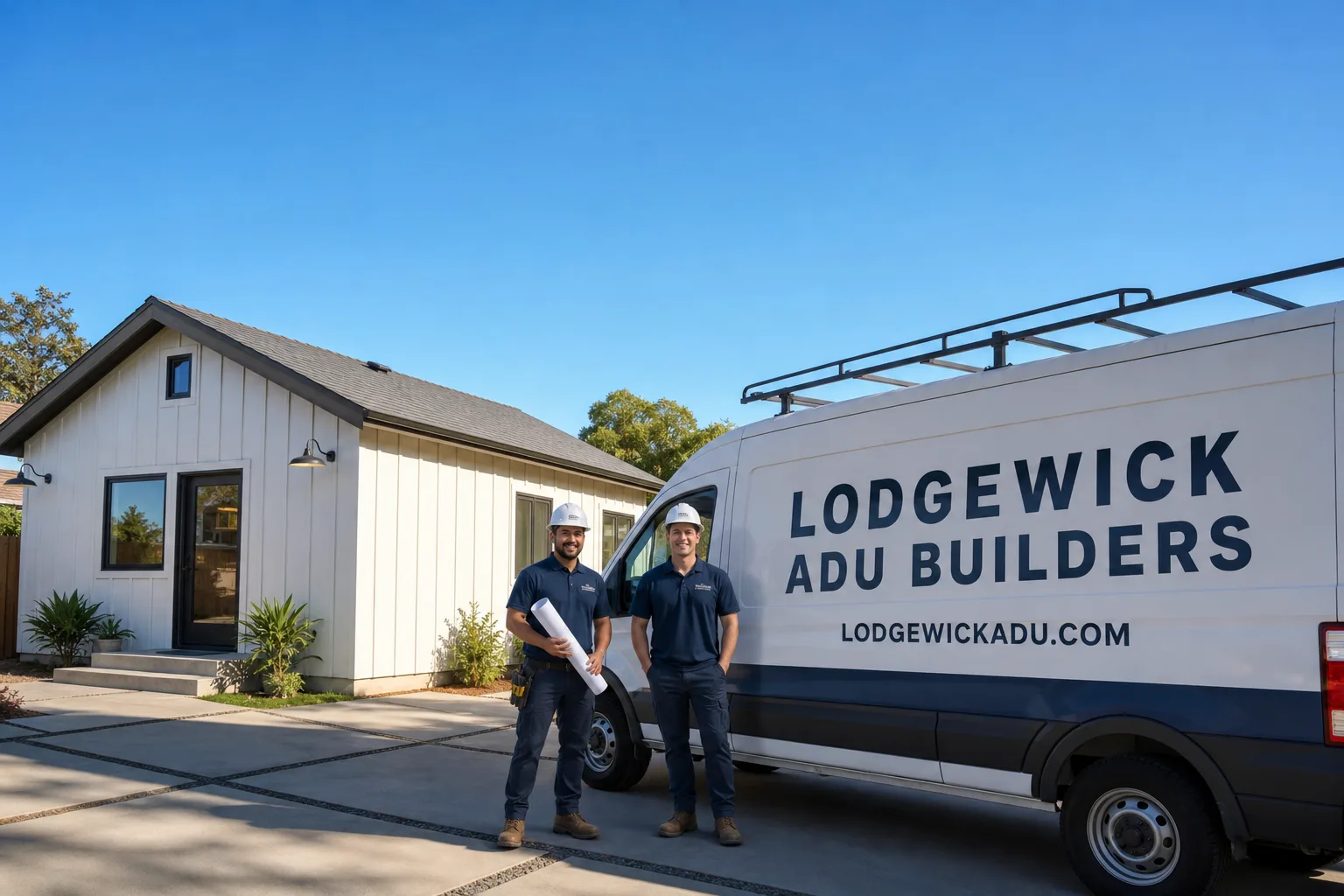
When your local Lodgewick ADU Builders team comes out, the first step is a site walkthrough – your lot, your existing structures, your setbacks, and your utility connections. We look at what type of unit makes sense (detached ADU, garage conversion, or home addition), what your local permitting path looks like, and what materials and prefab options fit your budget and timeline. We work with Abodu, Cover, Dvele, Mighty Buildings, Boxabl, Plant Prefab, Tuff Shed, and James Hardie – so we can match the right product to your lot rather than pushing one solution.
From that walkthrough, you get a written price before any work starts. That’s not a ballpark – it’s the number. If it doesn’t work for you, you’re not obligated to anything. If it does, every project is covered by our 365-Day Done Right Promise: if the work isn’t right, we come back and make it right, and that commitment is in writing on every project before the first nail goes in. The services that answer this question are our ADU building and garage conversion work.
Frequently Asked Questions
There’s no honest universal number – it depends on your market, your lot, the type of unit, and whether it’s permitted and finished correctly. What we can tell you is that a properly permitted, well-built ADU in a market that supports rental housing almost always increases appraised value and makes your property more attractive to buyers. The way to get a real answer for your specific property is a site walkthrough and a written estimate. Call (254) 602-5618 and we’ll set that up.
Yes, in almost every case. An unpermitted ADU can be excluded from an appraisal entirely, and in many markets it creates a disclosure obligation that complicates or delays a sale. A permitted, inspected, and certified unit is a documented asset. An unpermitted one is a question mark at best and a liability at worst. If you have an existing unpermitted structure, a site visit can help you understand your options for bringing it into compliance.
There’s no emergency here – an ADU is a planned project, not a crisis. That said, permitting timelines vary and some markets have waitlists or rule changes in progress that affect what’s allowed. Waiting a year to start a conversation sometimes means starting the project a year and a half later than you needed to. If you’re seriously considering it, sooner is better for the planning process. Call (254) 602-5618 to at least get a walkthrough on the calendar.
Every ADU project starts with a site assessment and a written price – that part we can schedule quickly, because a live person answers every call we receive, any time of day. The build itself follows a permitting and construction timeline that depends on your location and the type of unit. We won’t promise a start date before we’ve seen your lot and understood your permit path – that wouldn’t be honest. Call (254) 602-5618 and we’ll tell you exactly what the realistic timeline looks like for your project.
Get It Fixed
Your local Lodgewick ADU Builders team is ready to walk your lot and give you a written price – no obligation, no pressure. Call (254) 602-5618 any time; a live person picks up. Or book your site walkthrough online and we’ll be in touch to confirm your window.
Written by Russ Delmar, Owner at Lodgewick ADU Builders, serving communities nationwide as part of the Kingswell family of home-service companies since 2010.
What Our Customers Say
"A whole backyard ADU from scratch. Terrified me going in, but they kept me updated weekly and there were no nasty surprises. Quality work and a fair price."
- Noreen Fletcher"Built a backyard unit for my mother in law. They handled the permits, gave me a real timeline, and stuck to it within a few days. The written price is what we paid, which anyone who's done construction knows is rare."
- Dennis Fairchild"Garage conversion into a studio for our teenager. Honest about what was realistic and what wasn't, finished close to schedule, and cleaned up the site daily."
- Marcus Beaumont